
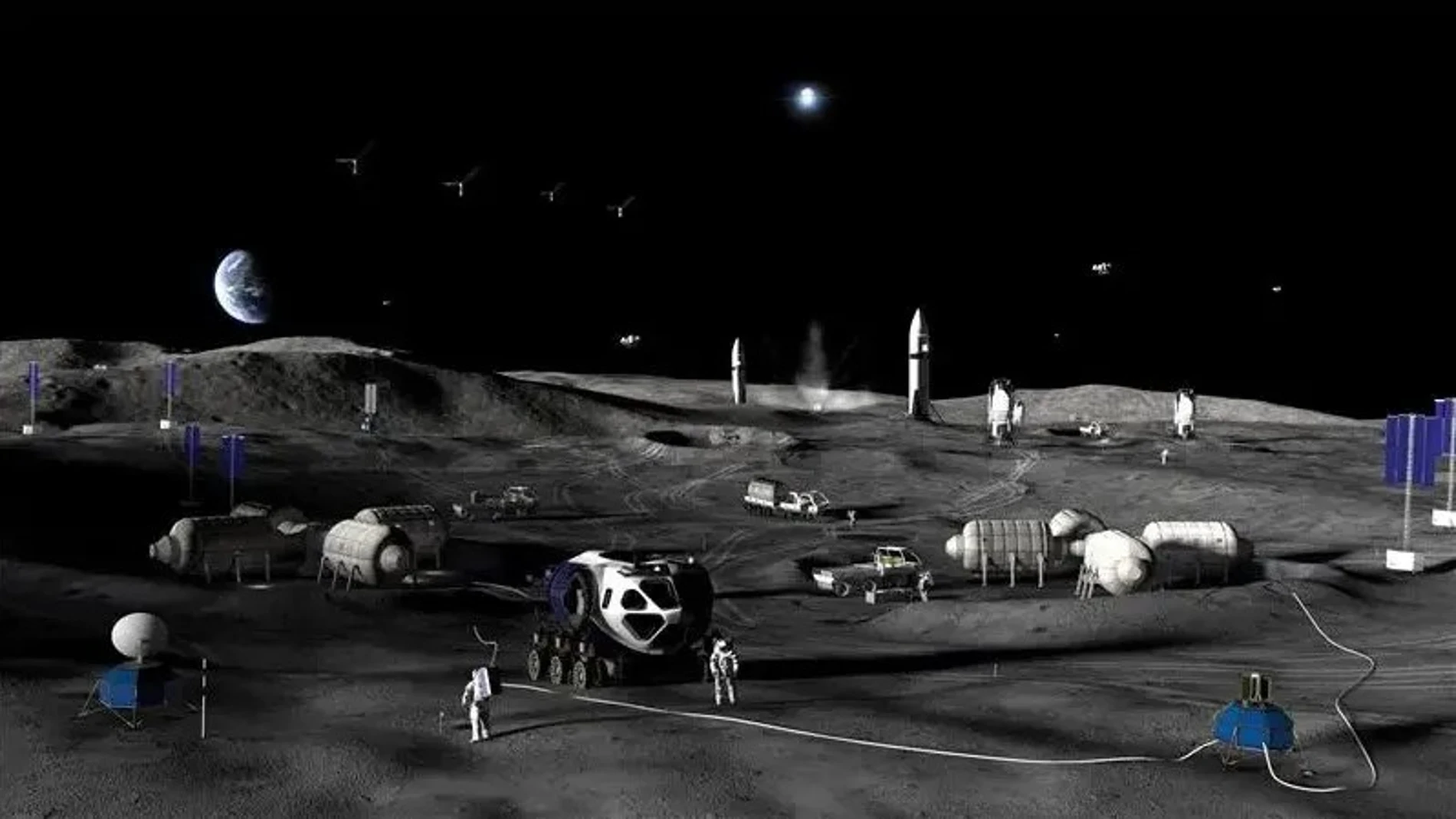
While the astronauts Artemis II they flew over the Moon In a historic mission, the POT published a ‘Moon Base User’s Guide’ in which he details numerous challenges that he will have to overcome for another even more impressive goal, the construction of a permanent lunar base that is budgeted at 20 billion dollars. The nine-page document, dated April 6, is a list of what the space agency needs to accomplish to make the ‘almost impossible’ space plans announced in February a reality. Among them is complete 73 moon landings in the next few years.
NASA wants to launch this barrage of robotic and unmanned lunar missions, with 21 moon landings in the next three years aloneprepare the first manned missions for 2028 and also launch the ship ‘Freedom’powered by nuclear energy, towards Mars in that same year.
The document highlights numerous gaps in NASA’s current capabilities to achieve these goals. These limitations affect the landing, habitability and energy systems; basically, everything that human beings need to land and live on the Moon. Aware of the situation, Jared Isaacmanadministrator of NASA, pointed out this April 14 to the attendees of the Space Symposium 2026in Colorado Springs, which The space agency is at its best when it ‘undertakes and achieves the almost impossible’as reported by Space.com.
Isaacman, who has been in office since December 2025, has accelerated the program Artemis to make NASA’s goals for the Moon and Mars a reality. This review includes the abandonment of the project for the first lunar space station, the Lunar Gatewayto focus on establishing a presence on the surface of the Moon. To achieve this, Artemis has been redesigned to add a second manned lunar landing mission in 2028, in addition to increasing the pace of launches and landings.
Three phases to build a lunar base
The 73 lunar landings planned by NASA will be distributed in three phases. It is not clear how many of them will be manned, but NASA has said it will begin with a series of robotic missions and first unmanned missions, while In phase 3, crew rotations on the Moon are expected to be routine.
Phase 1 will consist of 25 launches and 21 moon landings to establish frequent and reliable access to the lunar surface. This phase must be completed in 2029.
Phase 2, planned between 2029 and 2032will consist of others 27 launches and 24 moon landings and will serve to establish the initial infrastructure of the lunar base and semi-annual manned missions.
Phase 3, from 2032 until an unspecified future date, will add other 29 launches and 28 moon landings to implement unmanned cargo return technology and a continued human presence on the Moon.
‘The elements and development of the lunar base will take place in the lunar south pole region, which features incredibly different lighting conditions to those of the equatorial seas and highlands visited by Apollo,’ says NASA in the ‘Moon Base User’s Guide.’ ‘At the moon base, The Sun will remain low on the horizon, casting dramatic shadows that hinder solar electricity generation and subject systems to prolonged periods of extreme cold and darkness.‘, he adds.
NASA needs precise knowledge of lighting conditions and solar panel performance to develop suitable energy options. Furthermore, these must be strong enough to withstand exposure to lunar dust.
The document also points out that NASA needs detailed information about the lunar environment and systems capable of operating there. to use their radioisotope thermoelectric generatorsthat is, nuclear batteries that generate heat and electricity. NASA’s long-term energy plans also include build a nuclear reactor on the Moon.
Simply landing on the Moon as frequently as NASA anticipates already poses serious obstacles. For example, the document notes that the agency needs to develop precision landing systems capable of accurately measuring altitude in low visibility terrain, as well as hazard avoidance systems.
In the guide, some of the gaps regarding energy and landing are pointed out as technological deficiencies derived from the mission architecture that will require ‘completely new technologies or significant advances in performance’ of current ones.
There are important aspects that are barely covered in the document, as the response of the human body to prolonged stays in the lunar environmentalong with logistical challenges related to life support, exercise and nutrition.
Towards Mars
NASA says it is working to overcome the numerous technological and data gaps noted in the document. It also highlights the considerations ‘Mars-forward’that is to say, what NASA needs to develop with the lunar program to achieve its ultimate goal of taking humans to Mars.
Those considerations for Mars include data on the health of astronauts in deep space and the development of nuclear power systems on the lunar surface. According to the document, These nuclear systems will be useful to build similar systems on Mars and will favor the development of the nuclear-powered ship that NASA has planned..