
For years, the evolution of mobile photography has followed a fairly clear logic: better sensors, more megapixels, more sophisticated algorithms. But there was something that continued to escape this technological race. It was not in the lens or in the processing, but in front of the camera. The person. Because Taking a good photo doesn’t just depend on capturing the light well, but on something much more unpredictable: knowing how to position yourself.
That’s where the new twist that Huawei proposes with its new Pura 90 comes into play (it will be presented on April 20). It is not just about improving the image, but about intervening before it exists. To suggest how it should be built. The function is called “AI pose suggestions”, and its approach is as simple as it is ambitious.: The phone analyzes what it sees through the camera and proposes, in real time, how the person should be positioned so that the photo works best.
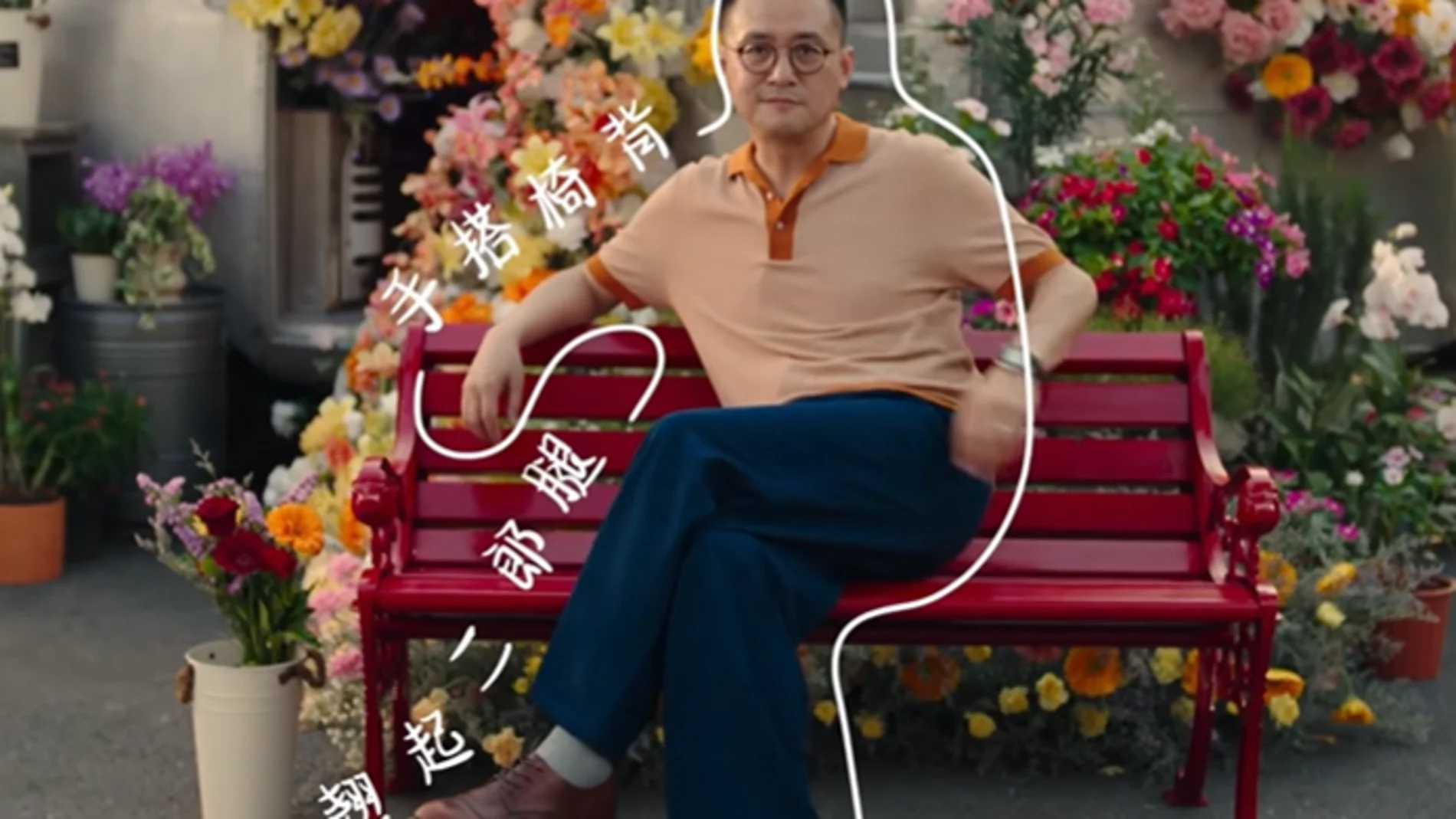
In practice, the system displays a silhouette or visual guide on the screen. A kind of “ghost” that indicates where to place your arms, how to tilt your body or where to direct your gaze. The user just has to line up with that figure and shoot. Everything happens in a matter of seconds. But the interesting thing is not the interface, which is quite intuitive, but what happens behind it. Because To suggest a “correct” pose, artificial intelligence has to solve a surprisingly complex problem in real time.
First, you must understand the environment. A photo on a rooftop is not the same as in a park, at a graduation or on a busy street. The system needs to recognize elements of the scene, interpret lines, depth, lighting and social context. It is, in essence, a form of computer vision that not only detects objects, but attempts to understand the scene. Next, you must analyze the subject. Its position, proportions, orientation, even its relationship with the background. It is not just about identifying a person, something that mobile phones have been doing for years, but about evaluating how they fit into the image.
And finally, you have to translate all of that into an aesthetic decision. Because a pose is not an objective fact, but a cultural conventiona mix of visual balance, narrative and, in a way, intuition. What the algorithm is doing is not simply optimizing an image, but imitating something much more difficult: a photographer’s judgment.
In fact, the system is not limited to giving generic instructions. Adjust your recommendations based on context. If you are sitting on a bench, it suggests a different posture than if you are standing on a viewing platform. If there is an urban background, the pose changes compared to a natural environment.
This type of adaptation reveals the extent to which mobile photography has ceased to be a purely technical issue and has become a problem of interpretation. It is no longer just about capturing reality, but about anticipating how we want to see it.
And there is something else, perhaps less obvious, but just as interesting. Traditionally, artificial intelligence in photography has focused on improving the photographer: suggest frames, adjust exposure, optimize color. Here, however, the focus changes. AI doesn’t improve the camera, it improves the subject.
It is a subtle shift, but significant. Because in the era of social networks, where personal image is almost a form of language, knowing how to pose has become a skill as relevant as knowing how to frame. What you propose Pura 90 is not just a tool, but a kind of invisible mediator between the person and their image. A system that observes, interprets and suggests, reducing the uncertainty of that uncomfortable moment when we don’t know what to do with our hands.
Maybe, in a few years, look back and Seeing our current photos, rigid, repetitive, full of automatic gestures, seems so strange what the first photographs of the 19th century seem to us today, where no one still knew how to position themselves in front of the camera. We will have to wait until the end of April to try it.