
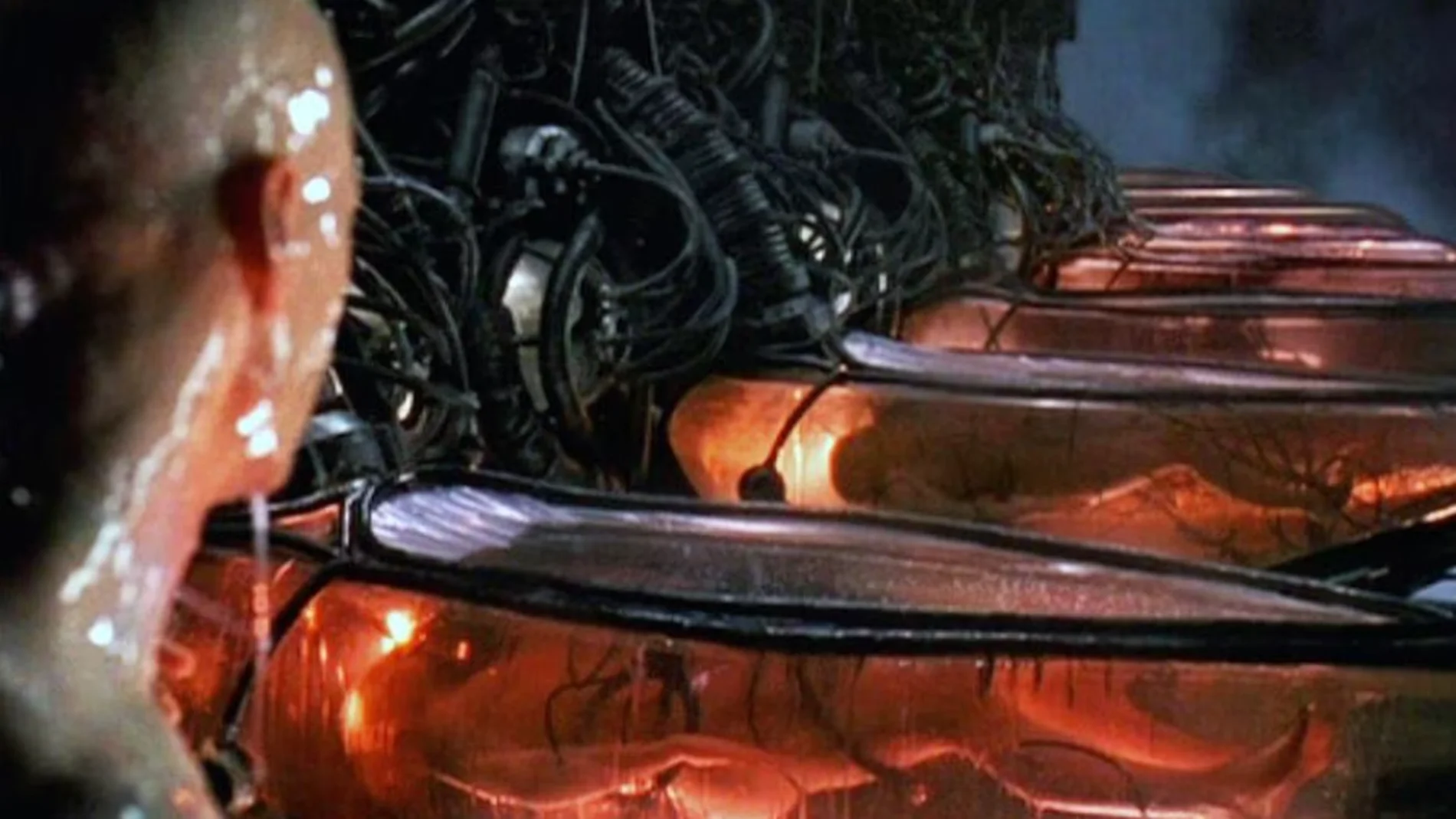
There are ideas that seem like science fiction… until someone starts asking for funding to make them a reality. In recent months, a small biotechnology company has put on the table one of the most disturbing proposals in modern medicine: creating human bodies without brains to use them as biological spare parts. Not as a metaphor, but as infrastructure. The idea is based on a classic question: Could we, one day, “download” our brain, memories, experiences, learning, etc. in another body?
The company is called R3 Bio and its proposal, summarized, sounds like something out of a science manual and a fiction story: manufacturing “complete bodies” with functional organs, but without brains, which would make them, in theory, incapable of feeling, thinking or suffering. The company has named these systems bodyoids or “organ sacs.” They would not be individuals, but biological assemblages designed with a purpose: to serve as organ banks, experimentation platforms or, in a more speculative future, as replacement bodies.
The logic they defend is almost industrial. The human body is not a collection of interchangeable parts, but medicine has been treating it as such for decades: heart, liver, kidney transplants. The next step, they say, would be to stop waiting for donors and start “growing” entire systems. So far, just a twist. But then the idea becomes more radical.
Because some of its promoters have suggested something that borders on the limits of current biology: using these bodies as the final destination of a transplanted brain… or even as support for a mind. Here it is important to separate the possible from the imaginable. On the one hand there is biotechnology. Today we already know how to grow tissues, create organoids in the laboratory and even clone mammals. The proposal to generate bodies without brains is based on this trajectory, although it is still very far from being viable in humans. There are enormous technical challenges: embryonic development, genetic control, complete vascularization, organ maturation. But the real leap is not that.
The real leap is the idea of transferring a mind. This concept belongs to another territory: that of the so-called mind uploading, or “uploading the mind.” A hypothesis according to which it would be possible to copy or transfer all the information contained in a brain and reproduce it on another medium, biological or digital. In theory, if we could map every neuron, every connection, every electrical pattern, we could reconstruct a mind somewhere else. But in practice, we are light years away.
The human brain contains about 86 billion neurons, each connected to thousands of others. But it is not just wiring: it is a dynamic, chemical, electrical system, constantly changing. Copying it is not like copying a file. It’s more like trying to freeze a storm… without losing its essence. And yet, even if we did succeed, the most uncomfortable question of all would arise: would it really be “your”… or just a copy?
The R3 Bio proposal mixes these two worlds: one tangible and the other speculative. On the one hand, it offers something with immediately… theoretical applications: replacing animal experimentation with complete biological systems, closer to the human body. This could transform drug development, making it more precise and, in some sense, more ethical. On the other hand, it suggests a much more ambitious horizon: total replacement medicine. Not repair the body, but change it. “Replace instead of repair,” as some investors in the project define it.
What do scientists think about this? Three Stanford University professors (Carsten T. Charles Henry T. Greely and Hiromitsu Nakauchi), who baptized these structures “bodyoids”, published an editorial last year in the MIT Technology Review magazine in favor of the manufacture of replacement human bodies. Although said editorial left many details to the imagination, They called the idea “at least plausible, and possibly revolutionary.”
“There is practically no scenario in which a whole body is needed – adds George Church, a Harvard geneticist and one of the experts who advocated resurrecting Neanderthals – I just think that, although it may one day be acceptable, it is not a good starting point. At the moment, human bodies without brains are not very useful, besides being repulsive.”