
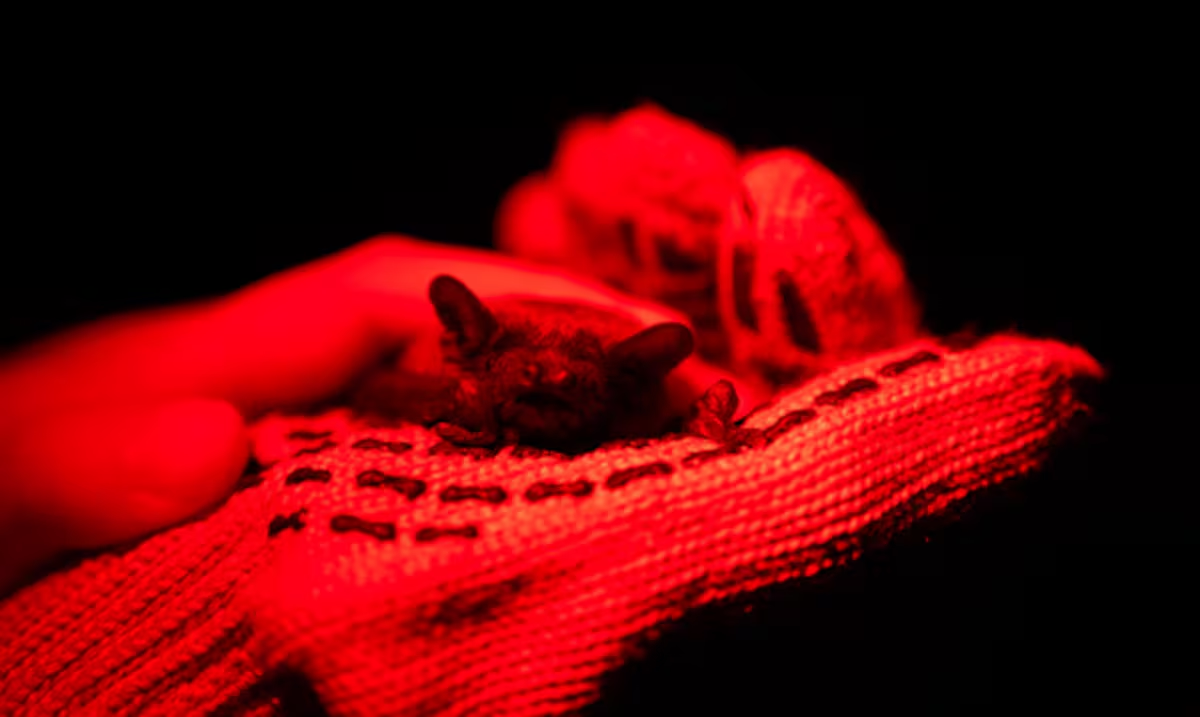
kyiv, Ukraine – As night falls on a nature park on the outskirts of kyiv, children crowd around volunteers who carefully open cloth bags and release bats into the darkness.
As each of them takes flight, more than 1,000 spectators cheer and applaud: families, off-duty soldiers and bat fans, some of them dressed in gothic costumes.
Hundreds of bats, many of them rescued from war-torn areas in the east of the country, were released late Saturday in one of the many events scheduled throughout Ukraine to coincide with the arrival of spring.
“This is important for us as an organization because these animals are on the red list of endangered animals. Preserving them is very important,” says Anastasiia Vovk, a volunteer at the Ukrainian Bat Rehabilitation Center, which organized the release.
Ukraine’s 28 species of bats are listed as protected animals due to declining populations.
For many attendees, the event was a relief and an excuse to go out with the family after a harsh winter marked by subzero temperatures, night attacks with Russian missiles and drones, and power outages.
Late Saturday, the children, many of them wearing bat T-shirts and caps, watched as volunteers fed them mealworms with tongs before releasing them. Some were able to put on gloves and handle the bats.
“Life goes on despite the war,” said Oleksii Beliaiev, a 54-year-old kyiv resident who attended with his family. “The war is the main thing right now, but there has to be something else too.”
Beliaiev runs a small printing business and spends time volunteering on army projects.
War has displaced both animals and people. According to experts, buildings destroyed by bombing damage bat roosts and explosions terrify these small mammals.
1/50 | Marked by war: 50 unpublished images from the fourth anniversary of the Russian invasion of Ukraine. Ukrainian military fire from a Russian Msta-B howitzer on a front line near the city of Kupyansk. – SERGEY KOZLOV
“In winter, bats hibernate and if disturbed, they can die. They reproduce slowly – one or two babies a year – so populations recover very slowly,” explains Alona Shulenko, who led Saturday’s release.
“As natural hibernation places disappear, bats move to cities, to the cracks of buildings and balconies. But the repair or destruction of these places can wipe out entire colonies,” he explains.
All Ukrainian bat species feed on insects and are legally protected, while the country is located on a major eastern European migratory route.
The charity claims to have rescued more than 30,000 in total, including 4,000 bats last winter.
“We all live in times of war, and everyone has their own struggles,” Shulenko said. “But we’re doing what we do best. … If we stop doing what we’re doing, thousands of bats will die.”
This story was translated from English to Spanish with an artificial intelligence tool and was reviewed by an editor before publication.