
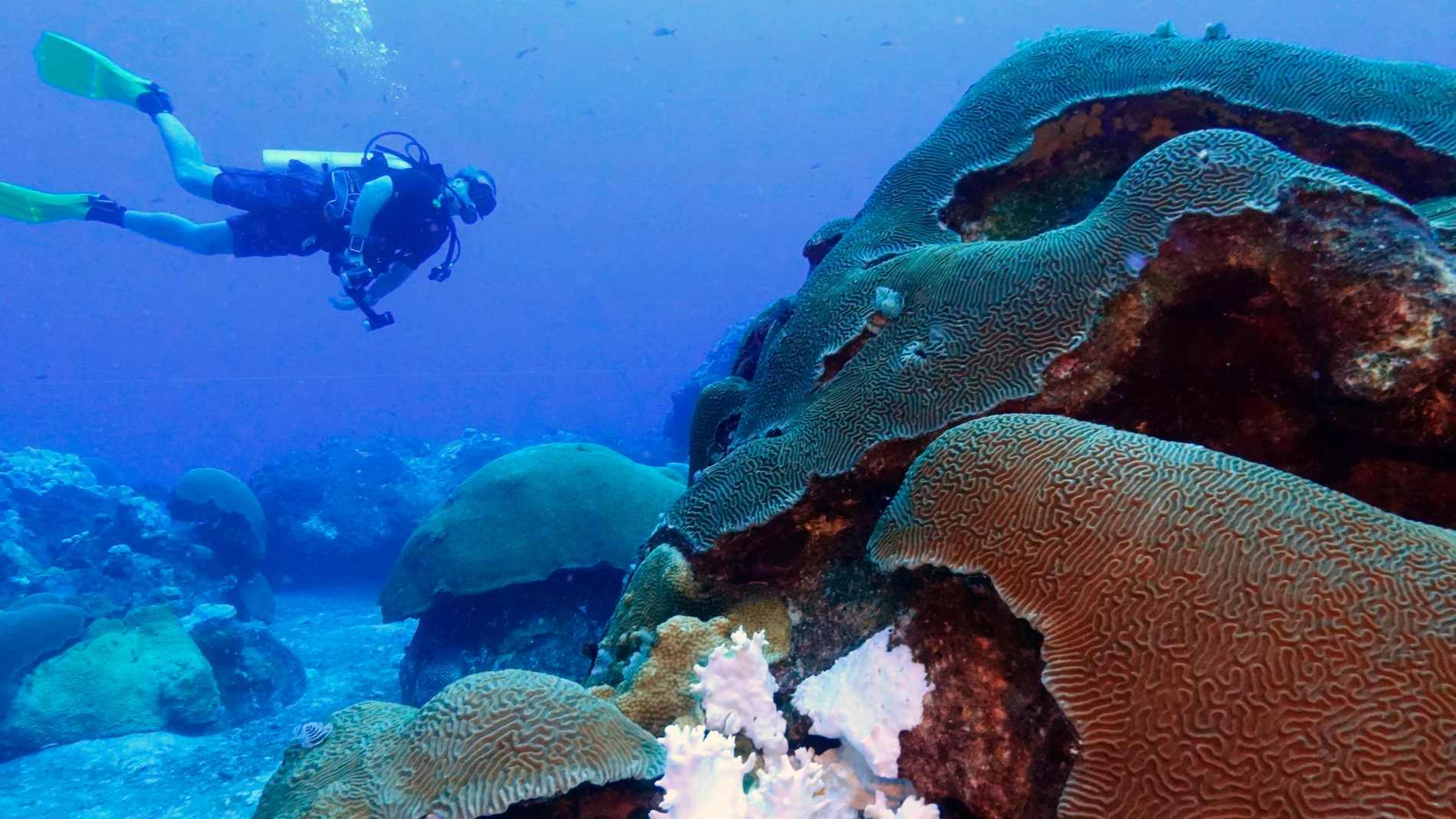
Reproduce corals on dry land seemed impossible in the Seychelles. No scientific team had done anything like this in the entire region of Africa and the western Indian Ocean. But scientists from the Assisted Recovery of Corals (ARC) project have achieved it.
After 15 years of research, they have managed to carry out the first coral spawning – a massive, annual reproductive event, in which they simultaneously release millions of eggs and sperm into the sea– in a terrestrial laboratory, a milestone that promises to revolutionize marine restoration.
It is the result of an alliance between Canon EMEA, Coral Spawning International (CSI) and the NGO Nature Seychelles. To understand its magnitude, it is necessary to understand that, unlike traditional “coral gardening” methods, which are usually based on fragmenting and cloning existing corals, this laboratory relies on natural sexual reproduction. Although more complicated to achieve, it generates greater genetic diversity, which allows new colonies to be much more resistant to increased water temperatures and phenomena such as discoloration.
The success figures are overwhelming. Since the ARC center was launched in November, some 800,000 coral embryos from 14 colonies of the species Acropora tenuis cf. macrostoma. Of these, the settlement of 65,000 new specimens has already been observed, a significant advance to restore the local marine ecosystem.
“Witnessing our first successful spawning in the lab has been enormously rewarding,” he says. Nirmal ShahCEO of Nature Seychelles. For Shah, this installation has completely transformed the conservation possibilities on the islands: “We have seen how baby corals not only survive, but settle, grow and overcome the most fragile thresholds of the first stages of life, turning the moment of spawning into an inexhaustible source of living reef builders.”
A driving factor in this achievement has been the use of Canon’s advanced imaging technology, which has allowed researchers to observe, document and understand critical phases of the reproductive calendar that were previously invisible to the human eye. “We have been able to observe critical reproductive processes with a clarity that we could only dream of before,” he says. Jamie Craggsco-founder of CSI.
The next step is to take these corals from the laboratory to the sea. During this year, scientists will focus on transplanting the juvenile specimens into their natural environment and monitoring their survival to ensure that these new, stronger and more diverse reefs can thrive in the face of the threats of climate change. What happened on Praslin Island is not just a local success; It is a model that is now sought to be replicated in other corners of the planet to protect underwater life.