
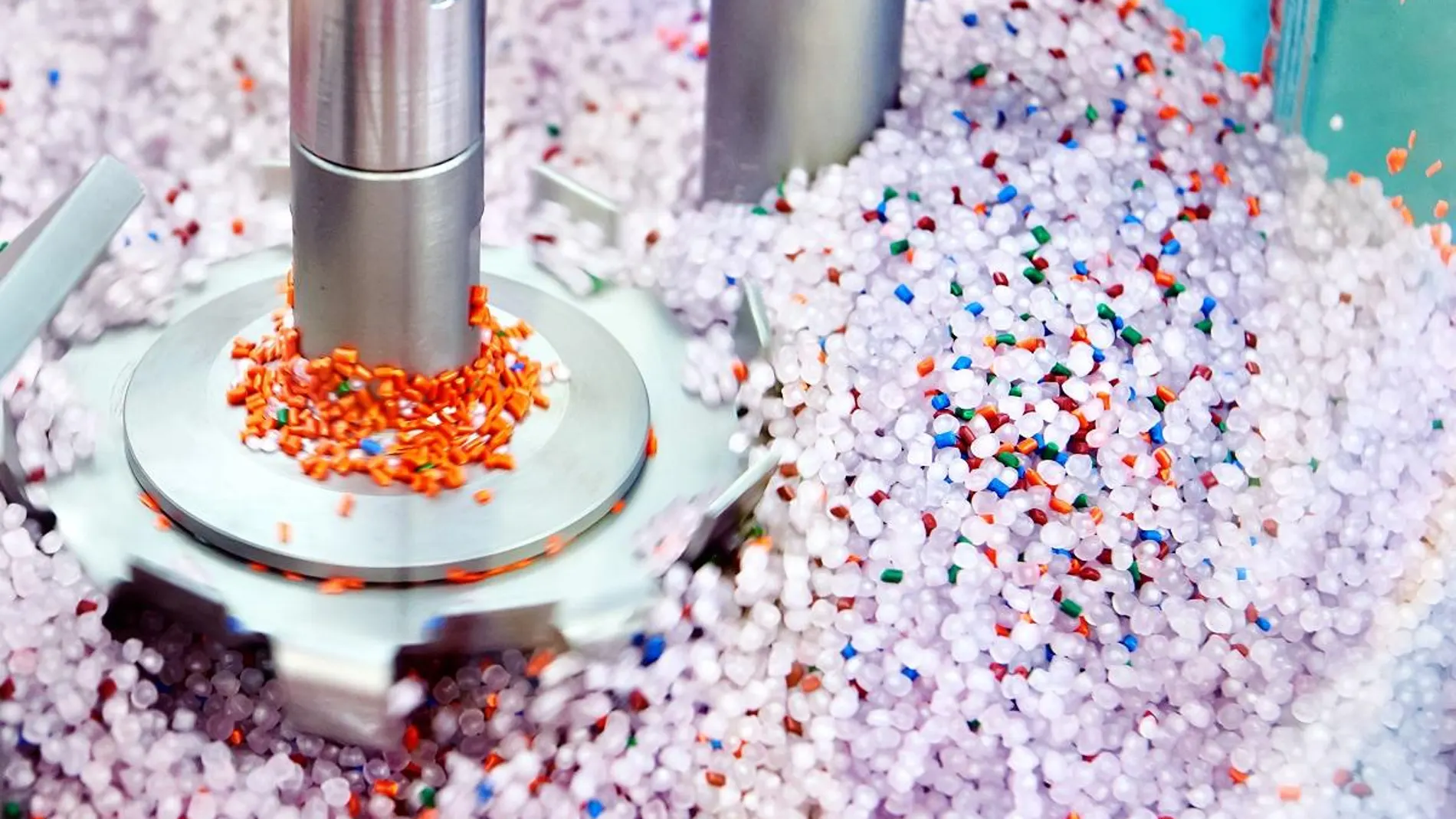
The start of the war in Iran has generated a storm in the global economy that directly affects oil and its derivatives, as well as national and international transportation. Since then, companies manufacturing plastic products have seen the price of their raw materials rise by around 30%.
These are data from a survey carried out by the Spanish Association of Plastics Industries (ANAIP) among its members, plastics processing companies that buy pellets in any of its formats – pellets, flakes or powder – to manufacture essential products for all types of sectors: containers and packaging, construction, pipes and accessories, plastics for agriculture, for the automotive industry, for the health sector, etc.
51.7% of those surveyed claim to be suffering increases in raw materials of more than 30% and almost 14% of the total have had increases of 50% or more. And the costs of maritime transport have also increased, more than 20% in 41% of companies, to which must be added an increase in energy costs, both in electricity and fuel.
External dependence on Europe
Another fact that the survey reveals is the growing uncertainty about the duration of the conflict. In fact, what worries companies most is that the war will prolong and generate breaks in the supply chain. Europe is not self-sufficient in many plastic raw materials and relies heavily on supplies from the Middle East or Asia, increasing the sector’s vulnerability to disruptions in international markets. “Any restriction on international trade or exports from these regions will generate additional tensions in supply, which may force some companies to temporarily stop production lines,” says Isabel Goyena, general director of ANAIP.
In fact, 60% of the companies participating in the survey claim to be already experiencing delays in the supply of raw materials, of which 21% indicate that the delays are serious.
Although a good part of the companies in the sector have stock to last a while under these conditions, the duration of the conflict is decisive and 38% of the companies affirm that they will not be able to maintain their activity for more than a month without having to make stops due to lack of raw materials, a percentage that rises to 72% in the case of periods longer than two months.
Request for support
Given this situation, ANAIP has contacted the ministries of Economy, Industry and Labor so that they take this sector into account in the design of possible measures to support the industrial fabric in this context.
ANAIP considers it essential to advance in the reduction of energy costs, especially through the review of taxes applied to electricity and energy consumption, in order to relieve pressure on industrial companies. It is also key to reinforce support for logistics and transportation to guarantee product supply.
In the fiscal and regulatory sphere, the organization considers it advisable to review certain charges, such as specific taxes, including possible modifications in the tax on non-reusable plastic containers, as well as enabling extraordinary labor flexibility mechanisms, such as specific ERTE for the sectors most affected by interruptions in supply chains.
Likewise, ANAIP considers it essential to closely monitor the supply of strategic raw materials for the processing industry. “From the sector we continue to insist on the need to strengthen strategic autonomy and local manufacturing capacity in Europe as a guarantee of security in the supply of basic plastic products for the economy and society,” concludes Isabel Goyena.