
The emergence of artificial intelligence in daily life and the world of work has generated a climate of global uncertainty about the future of employment. The speed with which AI models advance, from virtual assistance tools to systems capable of writing texts, analyzing data or generating images, forces us to rethink the traditional relationship between human work and technology. Voices inside and outside the technology sector They agree that this technology will profoundly change labor marketsalthough they differ in the exact consequences of that transformation.
Among the experts who have expressed their vision about this disruptive future is Mo Gawdat, former director of Google X, who has pointed out that artificial intelligence could surpass human intelligence in the coming decades. According to Gawdat, “by 2049, AI will be a billion times smarter than the smartest human being“, a prediction that he describes as the result of an exponential advance in the technical capabilities of intelligent systems. The idea suggests a world in which machines not only execute human tasks but surpass them by unimaginable margins, raising profound questions about the role of humans in economic production.
For his part, Sam Altman, CEO of OpenAI and one of the main promoters of technologies such as ChatGPT, has warned that automation will first affect sectors with tasks easily replicated by AI. Altman has explained in interviews that workers at customer service will be among the first to be replaced by systems with capacity to manage queries via telephone or computer, a trend that is considered part of a historical process of labor transformation accelerated by technology. Although these predictions are not unanimous, they do reflect a growing concern about how AI will be integrated into the global economy.
Vinod Khosla gives his opinion on the future influence of AI on the labor market
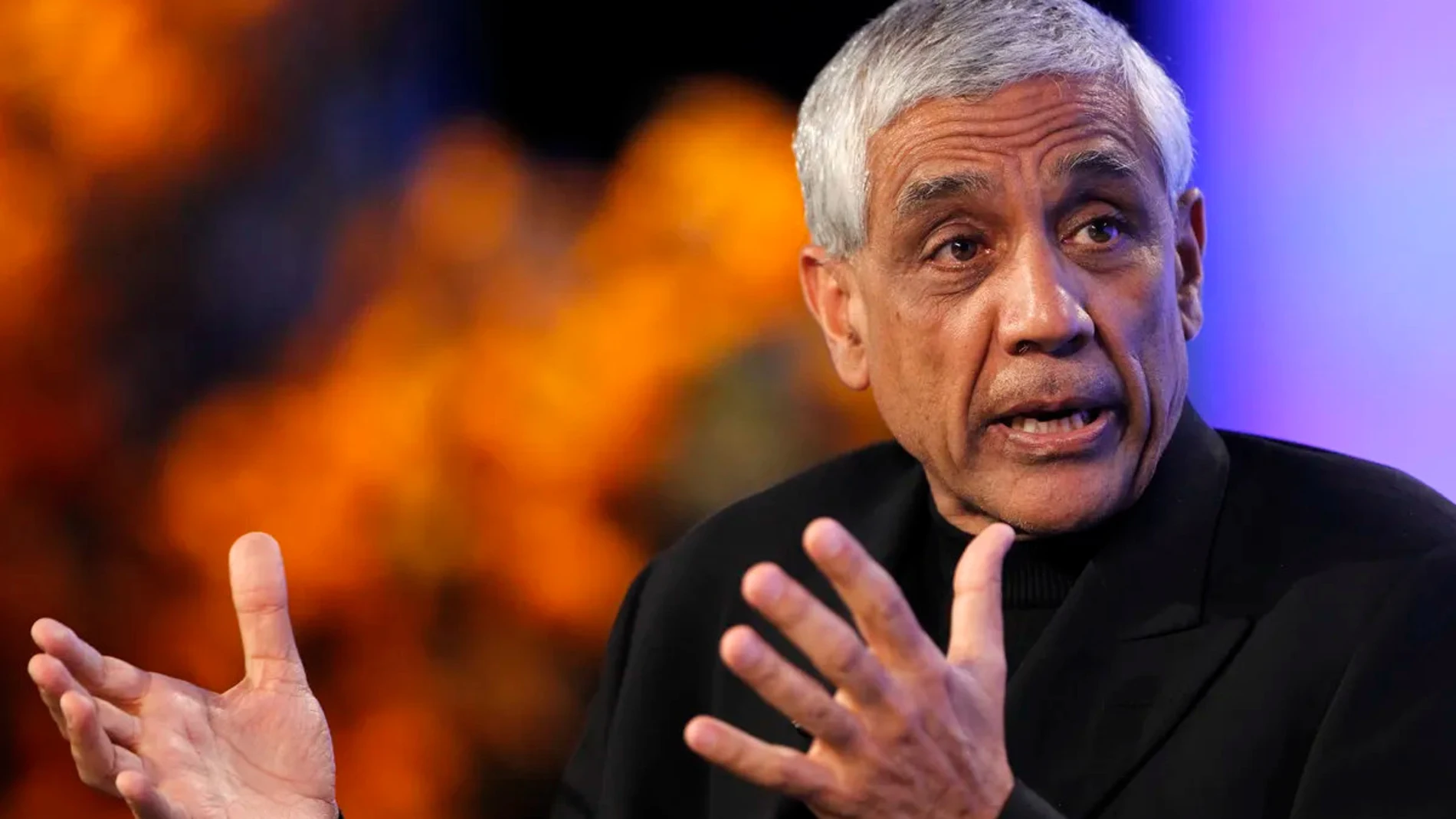
In this context, the statements of Vinod Khosla, veteran investor and one of the main investors in OpenAI, in his speech on the podcast Fortune Magazine, They have attracted attention for their radical vision of the future of human employment. Khosla argues that advances in AI could lead to a point where a A child who is now five years old will never have to look for a job in his life. because automated systems will do most of the economic tasks.
“It is quite unlikely that a child who is five years old today will ever have to look for a job,” Khosla said, highlighting that this transformation will affect even professions that are considered safe today. In his opinion, by around 2030 the artificial intelligence will be able to do approximately 80% of the jobsincluding doctors, chip designers or accountants, which will redefine the structure of the global labor market.
This technology would cause a paradigm shift
Khosla suggests that automation will not only reduce the need for human labor, but will also generate an economy of abundance in which goods and services are more accessible and where the value of traditional human labor fades. Under this scenario, the price of currently paid tasks could approach zero in a competitive economy, which would imply that future generations will grow up in an environment where employment will not be an economic obligation but a personal choice.
The investor also suggests that this change will redefine vocational education and training, as university degrees could lose relevance as a key to access the labor market except in very specialized fields. It also recognizes that the transition will be easier for younger generations who have never known a world focused on paid work, while those who have built their identity and livelihood around traditional employment may face deeper psychological and social challenges.
The questions about the advance of artificial intelligence
Although Khosla’s prediction is presented as an optimistic future in terms of material abundance, it also raises questions about how life will be financed in an economy where paid work is increasingly less necessary. The discussion about a possible universal basic income, social welfare systems adapted to the AI era or new forms of economic participation remains unresolved, underlining that although technology promises liberation from tasks, forces us to rethink the economic and social structures that have defined society human for centuries.