
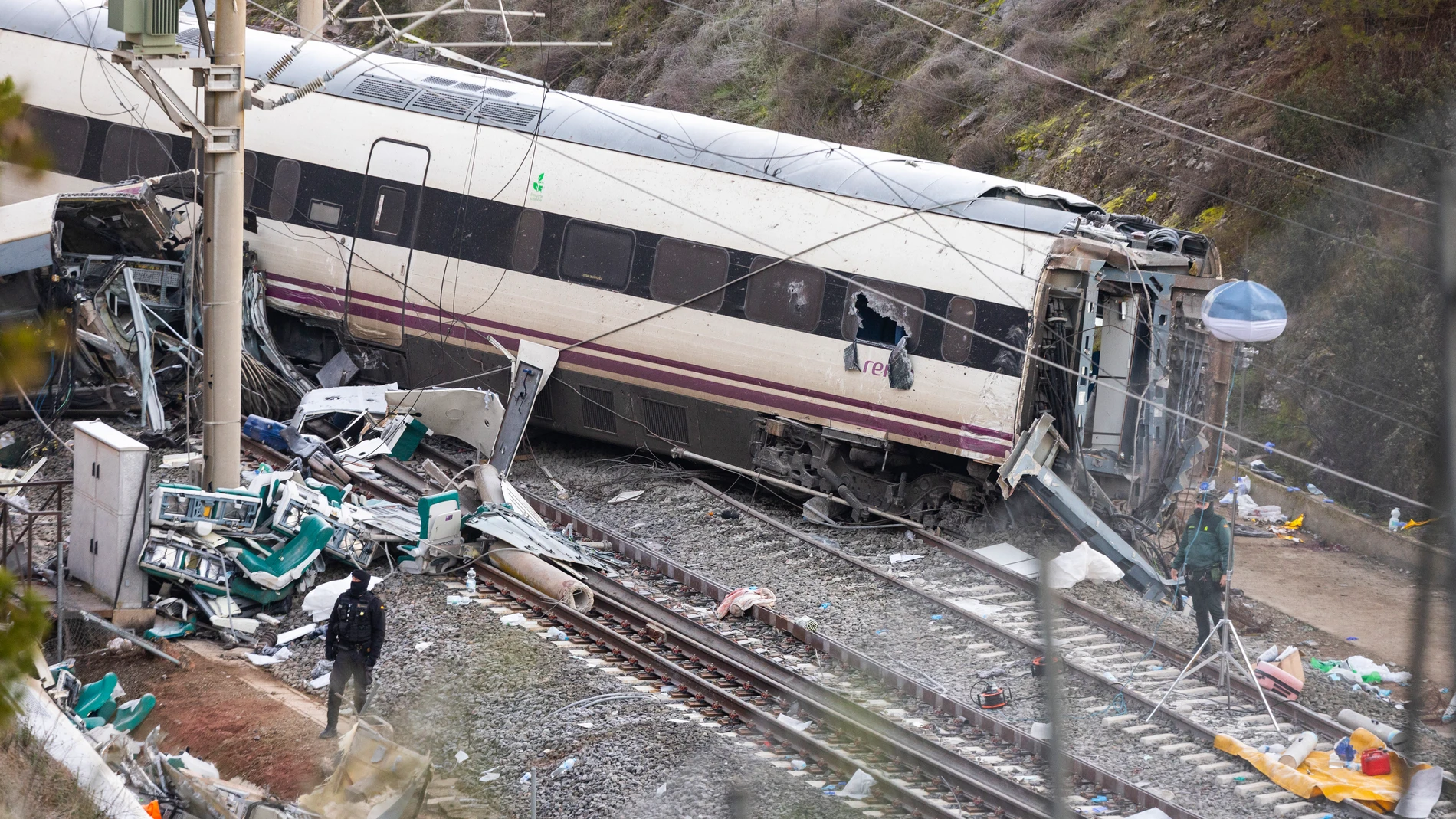
The head of the investigating court number 2 of Montoro that investigates the Adamuz train accident has ordered the immediate sealing of safe deposit boxes when the Judicial Police finishes analyzing them this Thursday. The judge acts ex officio after warnings from the Civil Guard that Adif took key material for the investigation of the scene without judicial authorization.
Sources from the investigation confirm to LA RAZÓN that Judge Cristina Pastor has commissioned the Organic Unit of the Judicial Police of Córdoba to seal all the material that is going to be analyzed in the offices of the Railway Accident Investigation Commission (CIAF), in Madrid.
Specifically, it has ordered the immediate sealing of the recording equipment of the Alvia and Iryo trains involved in the accident on January 18, as well as of security cameras of the second of the trains, whenever the dump and analysis thereof. Furthermore, it emphasizes that said equipment must be placed in the same place where it was found to guarantee that the chain of custody is not broken.
Leave the black boxes where they were found
The head of the court investigating the train accident that claimed the lives of 46 people, takes extreme precautions with all this material that will be studied this Thursday. This same week, the judge – at the request of the Provincial Prosecutor’s Office of Córdoba – gave the green light for the analysis of these sources of evidence, but ordered that the Civil Guard be present throughout the proceedings and that, at the end of it, extract a copy of the dump and take it immediately to the player.
In addition, he also issued an order to the Madrid courts to have a lawyer from the Administration of Justice attend the unsealing and gave the green light to use any computer equipment that allows verifying the identity of the files, their date of creation and if they have been manipulated. The judge agreed that this process would be carried out at the CIAF headquarters in Madrid, and not in the court investigating the events, to avoid the risks that a possible transfer of the recording equipment to the judicial offices would imply.
The judge agrees to all these measures after the Civil Guard warned in a report that Adif had taken parts from the trains at the scene without having the proper judicial authorization. The Armed Institute stated in a letter that the removal of welds and other types of material occurred in the early hours of January 22 to 23, that is, four days after the accident, without the judge having provided any protection.
Supervision of the Civil Guard
The agents learned of this based on what was stated by the person in charge of the Adif maintenance base in the Cordoba town of Hornachuelos. According to what he indicated, on January 22 he received a verbal order from the area head of the public company to transfer the rail coupons, among which there are welding, to said base. In addition, he also said that tests had been carried out on the aforementioned rails, although he said that the tests “they were not destructive.”
After obtaining this report from the Judicial Police, the judge warned Adif that could incur criminal liabilityif he did not return the pieces removed from the scene of the accident. In addition, it called on him to refrain from carrying out any operation related to these events. The company dependent on the Ministry of Óscar Puente stated, in a report prepared after the Civil Guard’s letter, that they took the pieces to Hornachuelos to prevent their deterioration and that nothing removed was manipulated.
However, the Judicial Police maintains its focus on Adif’s actions not only after the railway accident, but also on everything related to the maintenance of the tracks. This week he informed the judge that The CIAF has detected “inconsistencies” with the welds after analyzing the company’s material and has asked this commission to specify what exactly it refers to. The CIAF ruled in these terms after analyzing the documentation presented by Ayesa Ingeniería y Arquitectura SA, the company in charge of supervising the installation of the welds.