
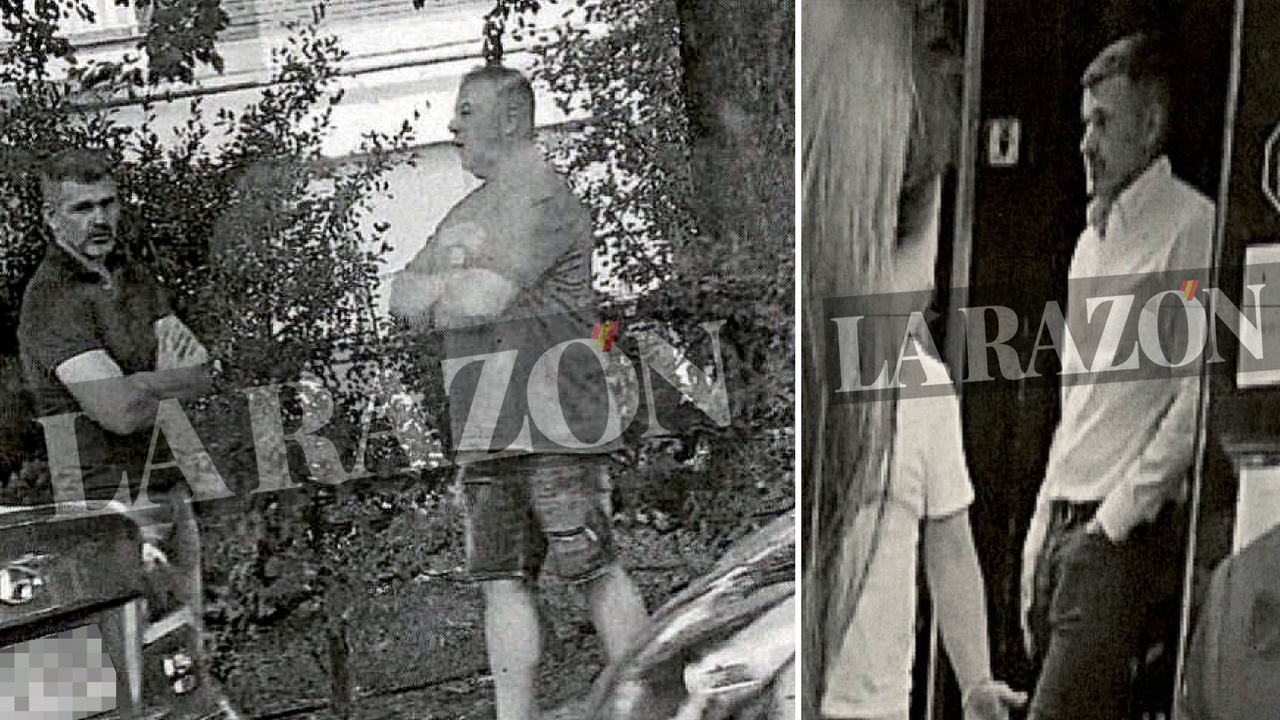
The alleged drug trafficker Ignacio Torán, partner of Chief Inspector Óscar Sánchez, managed to hide almost 1.8 million dollars before being arrested. To do this, he used the purchase of a series of properties in Colombia, one of the ways he used to launder part of the money he earned through drug trafficking. The Anti-Drug Prosecutor’s Office, in a recent writing to which LA RAZÓN has had access, points out that “not a single illicit euro has been recovered” from these operations.
Judge Francisco de Jorge ordered his imprisonment on February 9. Although he was arrested in November 2024, he was released after his defense alleged that his rights had been violated. The National Police continued working on the money laundering network of the alleged organization, and the judge kept a separate piece on this matter under summary secrecy. He did it, the Prosecutor’s Office points out, because otherwise there was a good chance that Torán would have fled to Dubai, where he also owns real estate and where Alejandro Salgado, alias “El Tigre”, leader of the organization, allegedly remains.
The analysis of the seized devices shows that in just two months, Torán moved 1,778,362 USDT, a stable virtual currency whose value is reflected in that of the US dollar. It has become very popular among organized crime precisely because its value does not vary greatly. Between May 14, 2024 and July 15 of that same year, he carried out 16 transactions to “pay for his Colombian properties,” says the Fiscal Ministry. He did it through Salvador Ferreira, alias “Sastre.” Since that summer, the balance is zero.
The latest reports in the case indicate that Torán used five people and almost a dozen companies to set up a structure with which to hide his money by purchasing assets. The Prosecutor’s Office points out that the alleged drug trafficker had an “important list of properties in Colombia.” Among all, six apartments stand out in the Solei tower in Cartagena de Indias, another five in the Kavos building – in addition to two premises – and another in Barugrande Beach House. “The amount identified so far paid by Torán for its properties in Cartagena de Indias amounts to 2,890,769.53 euros,” notes the prosecutor.
The “narcopolice” partner had three ways to launder and hide his benefits: the one mentioned in Colombia, the one already known in Panama and another in Dubai, known in the latest Police reports. “The enormous funds he obtained from cocaine trafficking,” says the Prosecutor’s Office, “allowed him to acquire several properties worth millions” in the city of the United Arab Emirates. On this occasion he also used front men and local companies to “hide” these homes, although in the intercepted messages he referred to them as “my houses.”
The investigation has located two properties on Palm Jumeirah, one of the super-luxury archipelagos built by the Emirati regime in which some of the most exclusive hotels in the world are housed. One of those houses is a “mansion”, according to the Prosecutor’s Office. He also acquired, through third parties, an apartment in the Six Senses Residences complex in Dubai Marina, another in the City Walk Residences and another in the Zabeel residence. “The consolidated illicit assets” in the Persian Gulf country “are valued at more than 20 million euros.”
Torán’s organization, in close collaboration with Óscar Sánchez – the police officer who was found with almost 20 million euros between the walls of his house and who will testify on March 9 – “directed and coordinated” at least since 2020 the introduction of 39 containers with more than 73 tons of cocaine with a market value of 2,000 million euros.
The agent’s role was key, since thanks to his operational position he could enter the numbers of the containers where the drugs were going, and thus control if they were going to be intercepted upon arriving at the Spanish ports or if other units were investigating them. He also entered the names or license plates of his partners so that, in case someone followed their trail, an alert would go off.
Reports indicate that Sánchez had developed a “thorough and expert modus operandi” with which to guarantee the safety of the companies and people with whom he collaborated. In this way he was capable of aborting an operation or rescuing cocaine if he could not stop someone else’s investigation.