
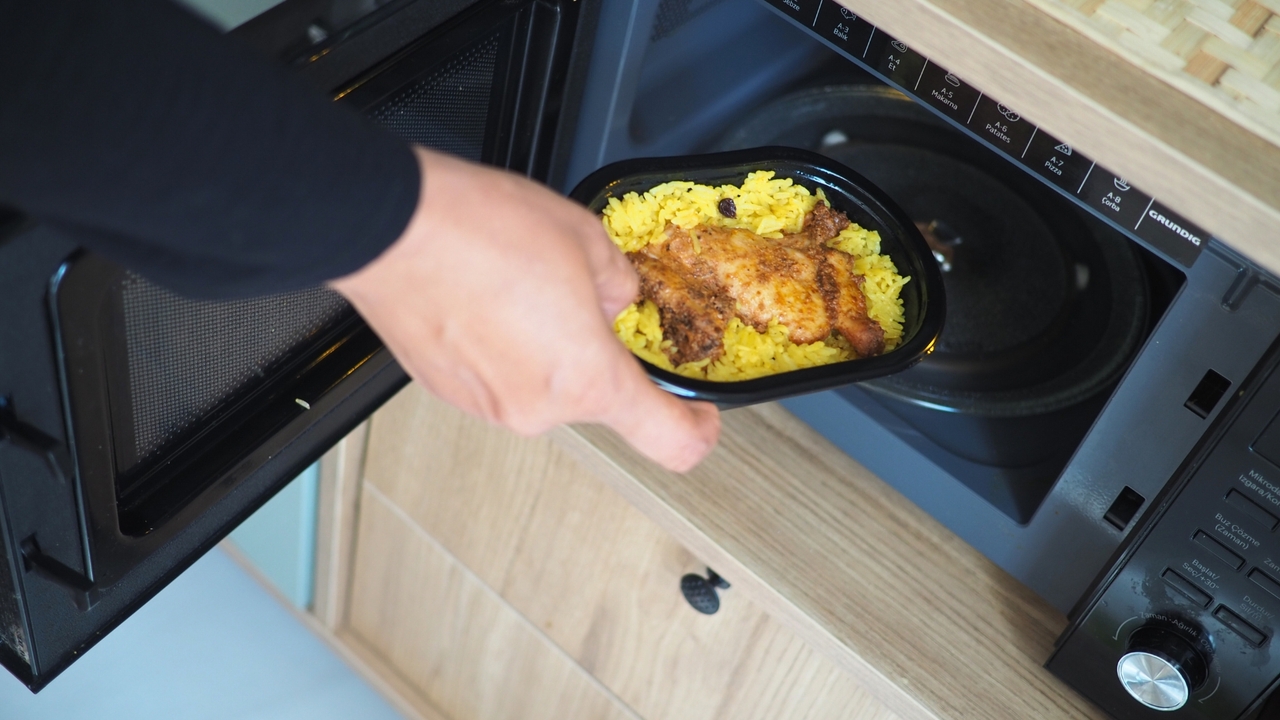
In a world where time is the most scarce commodity, the food industry has found its golden goose: “microwave-safe” ready meals and takeaways. However, what seems like a harmless solution for a quick dinner could have serious health risks that are being disclosed by manufacturers.
A new Greenpeace reporttitled Alert: Microplastics in ready-made foodsheds light on the invisible dangers that we ingest along with our favorite recipes and how, often without knowing it, they are putting our well-being in check.
The “microwave safe” myth
Most consumers fully trust labels on plastic trays that claim to be heat safe. But Julio Barea, Greenpeace’s waste manager, believes that this tranquility is fictitious. “Consumers believe they are making a harmless decision when they buy and microwave food. This report shows that Corporate ‘microwave safe’ claims are nothing more than fantasies”.
The research, based on review of 24 recent scientific studiesreveals that using these containers in the microwave can release hundreds of thousands of micro and nanoplastics in a matter of minutes. A specific study detected between 326,000 and 534,000 particles seeping into food after just 5 minutes of heating; This represents up to 7 times more contamination than if a conventional oven were used.
Barea warns that “we are being exposed to a cocktail of microplastics and dangerous chemicals that should never be in or near our food.” But the danger doesn’t end with plastic fragments.
Heat acts as a catalyst that weakens the chemical bonds in the container, facilitating what experts call thermal leaching. This process allows a “cocktail” of toxic substances migrate directly into food, especially if it is fatty, acidic, or salty.
Among the “unwanted passengers” identified in the reports were:
- Bisphenols (BPA, BPS, BPF): Used to harden plastic and linked to breast and prostate cancers, as well as infertility.
- Phthalates: Substances that provide flexibility but are toxic for reproduction.
- PFAS (“Eternal chemicals”): Used to repel fat, related to liver damage and a lower immune response.
- Antimony: A toxic metal used in the manufacture of PET containers that can interfere with the immune system.
Spain: the rise of opening and heating
The situation in our country is especially worrying. The consumption of prepared dishes in Spain has grown by 3.8% in the last year, driven by new home models and lack of time. Distribution giants like Mercadona already lead this marketrepresenting 20% of the sector and even surpassing bars and cafes in the offer of ready-to-eat meals.
This change in habits fuels an unprecedented packaging crisis: the 40% of all plastic transformed in Spain is destined exclusively for the manufacturing of packaging. According to Barea, “governments have allowed the petrochemical and plastic industries to turn our kitchens into centers of pollution.”
Long-term health consequences
Science has already found traces of these substances in the human body, including blood, placenta, breast milk and organs such as the liver and heart. Exposure to these endocrine disruptors is associated with metabolic diseases such as obesity and type 2 diabetes, as well as neurodevelopmental disorders in children, such as ADHD.
“They are poisoning us while we try to feed our families. The risk is evident, the stakes are high and the time to act is now. We cannot trust the misleading promises of plastic companies and lobbies,” concludes Barea, urging governments to act under the precautionary principle through a UN Global Treaty on Plastics, which protects human health.
What can we do as consumers?
Although the problem is systemic, source experts suggest immediate measures to reduce exposure:
- 1. Always transfer food: Before heating, transfer the food to microwave-safe glass or stainless steel containers for the oven.
- 2. Avoid plastic film: Do not heat food covered with this material; If it already was, rinse the surface of the food if practical.
- 3. Do not reuse damaged containers: Old or scratched containers release almost twice as much microplastics as new ones.
- 4. Prioritize glass: Whenever possible, choose non-plastic storage options.