
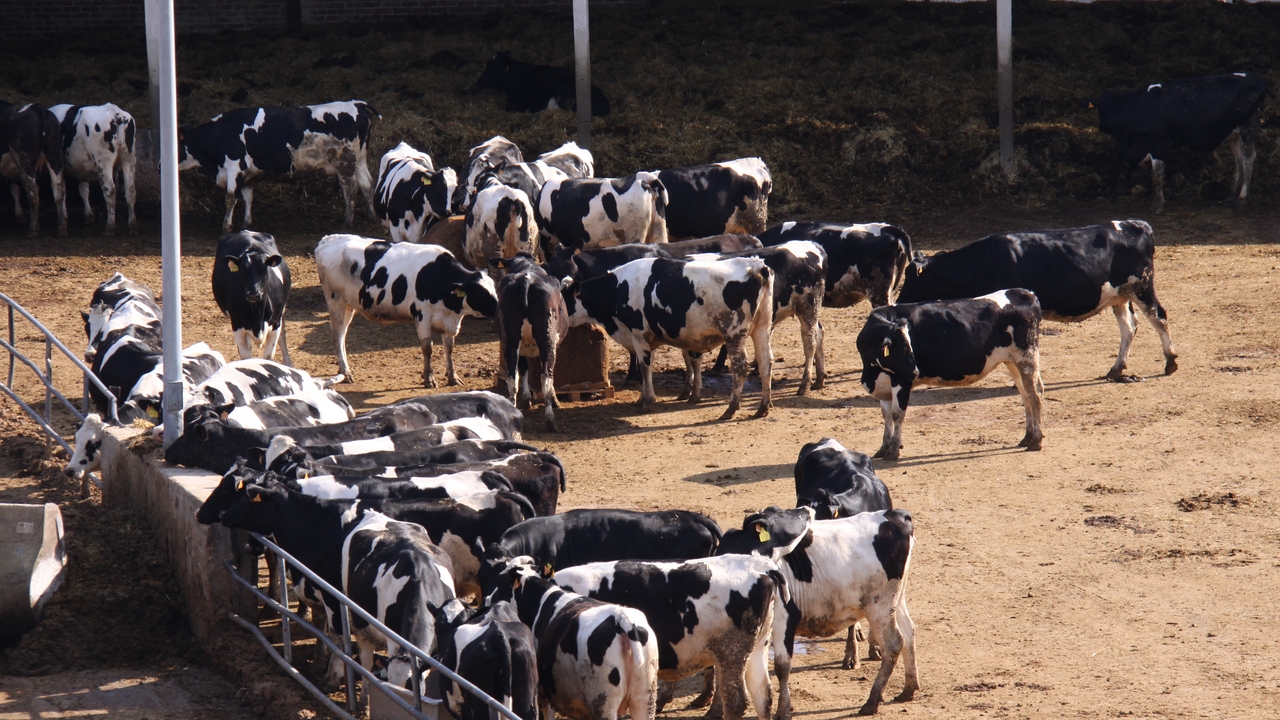
Milk producing farms from different parts of Spain, with numbers of cows ranging from 30 to 350 and farm areas from 3.5 to 170 hectares, participate in a research project that seeks to reduce the carbon footprint of milk production. An essential and widely consumed product, so advancing the lowest environmental impact in its production is very convenient.
This is an initiative that aims to measure the real impact of the activity to, once it is reliably known, identify the productive practices on which to act and, therefore, improve to reduce the carbon footprint while maintaining the economic and social viability of the exploitation.
The project is led by Acodea, a Spanish international cooperation agency created at the initiative of the Union of Small Farmers and Ranchers (UPA) and the Federation of Rural Women (Fademur) – and financed by the Ministry of Ecological Transition.
Data, the key
Lasting six months, in the first phase information will be collected on “all the resources and tasks necessary for the production of a kilo of cow’s milk: water, fertilizers for growing fodder, livestock management, waste, etc.,” explains Manuel Nogales, director of Acodea. «All this influences and without all this you cannot produce milk. Therefore, knowing it is essential to detect at which stages of the process environmental impacts occur and detect critical points in order to improve the sustainability of farms,” he concludes.
Ten farms participate in the project, all of them intensive, from Galicia, Castilla y León, Cantabria and Catalonia, and we hope to also incorporate some from Andalusia. “It is important that there is territorial variability to have representative data for all of Spain.” Likewise, there is diversity both in terms of the number of “heads of milking cows and surface area.”
In this phase, the involvement of the ranchers is essential since “they have to collect the data that will then be digitized and analyzed by the technicians. “It is a team effort and without one part the other cannot advance.”
Life cycle analysis
The Life Cycle Analysis (LCA) methodology will allow calculating the carbon footprint associated with each kilo of milk produced from its origin to the farm’s exit. As well as whether a smaller carbon footprint also reduces impacts on biodiversity.
The final phase of the project will be the development of a guide of realistic and applicable good practices on livestock farms, “which in addition to reducing the environmental impact of farms, will make their management more efficient in terms of better use of resources and livestock management tasks, which is also interesting in economic terms for livestock farmers.”