
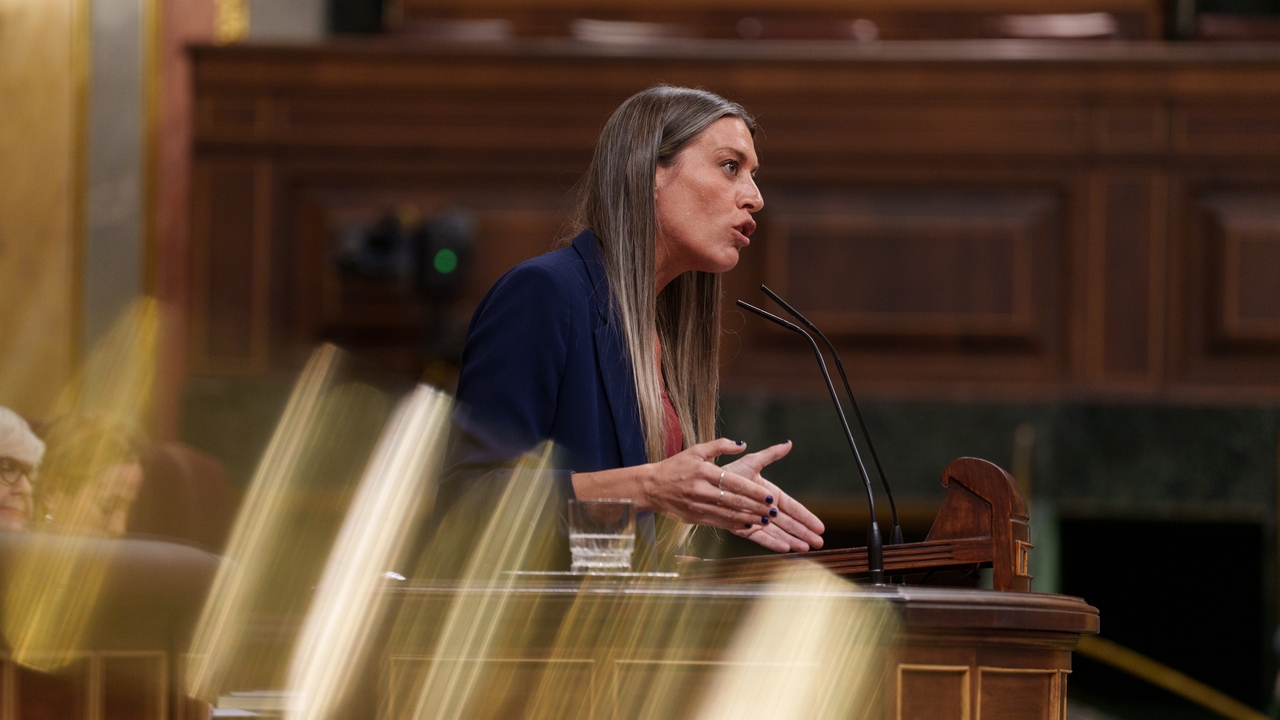
Yesterday the Congress of Deputies overturned a Vox law to prohibit the burqa and the niqab in public spaces. However, despite the refusal, the proposal of the extreme right-wing formation opened the door to a debate that many political forces consider necessary and, given the position maintained yesterday by some and others, the possibility is now looming that the burqa may end up being banned in Spain. It would do so following the lead of nine other European countries where this prohibition already exists and, strikingly, in the hands of an independence party such as Junts.
The formation of Carles Puigdemont He announced yesterday that he would not vote for Vox’s rule, precisely because it comes from Santiago Abascal’s party, and registered another law in Congress to prohibit clothing that covers the face for safety reasons. This would mainly affect the burqa and the niqab, although also other garments such as balaclavas. Furthermore, the Junts text includes an additional provision that transfers security powers to Catalonia.
Junts sources acknowledge that this is a rule that had been in development for some time, but that they had no intention of currently registering. However, the media dimension that the Vox law reached led them to put the debate on the table. It must be taken into account that the independentists are currently in an electoral struggle with Aliança Catalana and that they would have paid dearly for the image that they defend the use of the burqa.
Although it is a multifaceted debate, Junts’ move served to divert the focus from Vox’s law to its own and the truth is that, with this change in the game, it seems that there is now a possibility for the parliamentary process to advance. Sources from the PP recognize that, in the absence of the party leadership making a decision, they would have no problem accepting at least taking it into consideration so that the law does not die and then amending those parts with which they do not agree.
The Junts rule has only one article, which the PP shares, and the provision of transfer of powers, where the PP could oppose. From Junts they explain that this provision of transfer of powers is a kind of catchphrase that they always include to demand greater management by Catalonia. Although they do not acknowledge that they would be willing to drop that part in order to approve the law, nor do they say that it is a fundamental issue.
They are even convinced in Junts that there will be practically no need to negotiate the law with other political forces. “It is a law so similar to what is in force in the rest of the European countries, where it is seen that it works well, that there is little to negotiate. It is more a question of will; either you want to approve it, or you don’t want to. And if you want, it is a very good basis,” say the sources.
If Junts renounces that provision registered in a sovereignist key, it does not seem difficult to get the PP to vote in favor of the norm. Now all that remains is to get the support of the PSOE for it to move forward. Although the socialists voted yesterday against the Vox rule because they considered it “xenophobic”, they are not against banning the burqa itself and its spokesperson, Patxi Lopezassured that they would carefully study Junts’ proposal. López even asked that this debate be opened, something that the left in general shares, but fears due to the racist connotations it may have.
After López’s press conference, during the debate in the Chamber, the PSOE deputy Andrea Fernandezformer Secretary of Equality, even reached out to the popular parties to reach an agreement between the two. “Members of the PP, I propose something to you,” he said, “let’s debate, let’s talk seriously, let’s do it away from fear of the other, let’s do it in the name of freedom, let’s do it convinced that we can be better than hate.”
Fernández staged this attempt to unite positions after defending that “all clothing intended to hide the identity of women because it is part of sexist logic.” “The niqab and the burqa are unacceptable for those of us who consider equality as a basic pillar of our coexistence,” he added.