
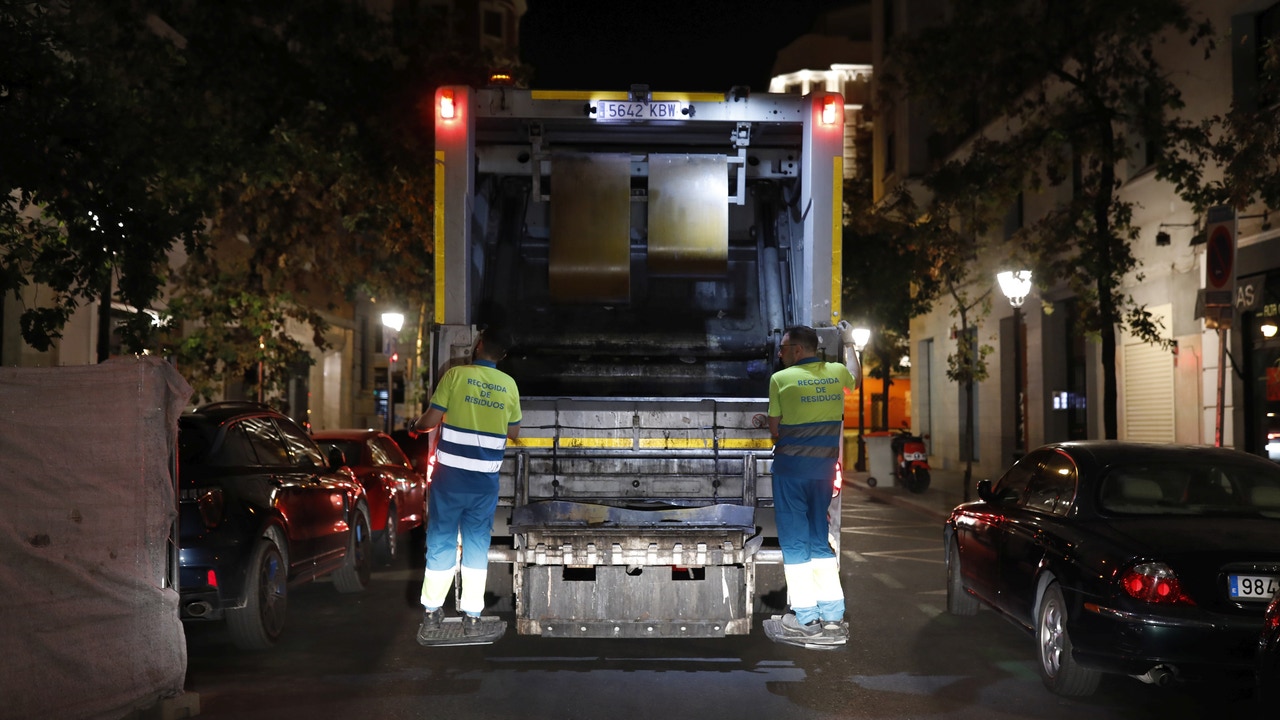
A few days ago, Facua–Consumers in Action launched a platform for those who want to claim the return of the new Waste Management Rate (TGR) from their municipality. They consider that in many cases it has been applied in an “irregular” way.
The Law 7/2022, on waste and contaminated soils for a circular economy, results from the transposition of the European Directive. The text established a period of three years for all local entities had a differentiated rate that reflected the real cost of the service. It introduced the concept of payment for waste generation and proposed providing incentives to those who do a good separation at source of recyclable waste. One of the keys to the rejection must be found in the increase in costs for citizens to pay for the garbage collection and management service. «The majority of local entities have been very slow in adopting the measures required by law. For many it has been a challenge, but they have lost valuable time,” comments Ignasi Puig, director of the study “Waste rates in Spain 2025” and member of the ENT Foundation. The analysis indicates that the average value of the domestic rate in 2025 amounts to 116.32 euros per home, compared to 100.12 euros in 2024, which represents an increase of 16.2%. The amount varies depending on the municipality, since local administrations are responsible for calculating it, which generates differences of up to 230 euros per year depending on the place of residence. The three provincial capitals with the highest averages are Valencia (287.56 euros per year), Girona (238) and Tarragona (236.29). On the other side are Toledo (56.87 euros), Palencia (57.41) and León (62.53).
Application form
Another complaint has to do with the way in which the rate is being applied. Those who pollute the most do not pay more, but other factors are taken into account. According to the study, «34.7% of the municipalities analyzed maintain household rates with a fixed fee for all households; In 32.82% of cases the surface area is taken into account; by 9.16%, the cadastral value; by 8.40%, the number of inhabitants, and by 7.63%, water consumption. “Payment per generation systems, which adjust the fee according to the amount of waste produced and effective selective collection, continue to be a minority in Spain.”
For this reason, consumer organizations such as Facua encourage people to claim the new rate, because they consider that it is not justified and that it is applied irregularly, at least in Madrid, Badajoz, Valencia, Salamanca, Segovia, Soria, León and Zamora. «We do not propose that it be eliminated, but that it be applied well. Because of the way it has been done, it is as if tomorrow all the homes in a city would pay 300 euros of IBI, regardless of whether the home is 40 meters or 500. To encourage recycling, citizens should have a way of accrediting the city council that they are separating well, and that they deserve their rate to be lower than that of another that generates a huge amount of waste. In many European municipalities there are formulas, for example, electronic cards that open the containers and record what you deposit and then apply tax benefits to you. Or special containers to separate certain waste. Furthermore, Brussels proposed charging a fee in exchange for the city council applying improvements in the separation and recycling protocols, but we don’t see that either,” says Rubén Sánchez, general secretary of Facua.
Starting point
For Eduardo Perera, deputy director of the Conama Foundation, “these rates – which were already common in towns in Catalonia – are a good starting point to know exactly how much the waste collection and management service costs municipalities.” Remember that it is not a tax, but a fee for a service. «The objective is to have clear accounting to then improve and optimize costs, in addition to developing systems that reduce waste that ends up in landfills and reward those who do it best. What has been controversial has been how it has been applied. In some cases it has been done through indirect methods because direct methods, such as weighing individual garbage, are economically unfeasible. It is true that the more people live in a house, in theory the more waste is generated, but in tourist apartments there may be no one and garbage is still generated. The approximations are imperfect and are being used to challenge the law. But setting a tax is common in Europe: it allows us to be more transparent and for each municipality to know what waste management is costing. Before, the items were very disaggregated: collection on the one hand, trucks on the other included as part of the fleet, the containers were purchased by another unit, the staff was managed by another… Now when you put them together you will see the real cost. “Waste management is the first or second largest expense of a municipality.”
Pay twice
Another of Facua’s claims is that “the fee must be economically justified and its costs must take into account the income that the city council receives through the Extended Producer Responsibility (EPR) systems, which already contribute to financing the service.” The association denounces that consumers end up paying “double”, since when purchasing products they pay an amount intended for their management and recycling. “We don’t want to pay twice,” says Sánchez.
Rosa García, general director of the Rezero Foundation, points out something similar. «The rate continues to put the focus on the consumer, but we believe that it is important that there be a redistribution of responsibilities. In an ideal world, consumers should only worry about separating organic products. The rest of what arrives and becomes waste are products that manufacturers and distributors have put on the market. “They are the ones who should really bear the cost of management.” The entity has monitored light packaging for years and considers that the cost assumed by SCRAP does not cover 100%. «It has been increasing, but there is still an important part that the municipalities assume. Furthermore, for example, since 2025 it is mandatory for municipalities to selectively collect textiles and no one is paying for that. It also happens with furniture and has happened with coffee capsules. We believe that the important thing is that producers really assume the cost of the waste they generate. The rate must be applied, but there are possibilities to make it fair, with incentives such as those in Barcelona – reductions for those who use the green point – or Formentera – bonuses for those who compost at home.
And the ENT study is clear. Right now, only 19.1% of municipalities with rates contemplate some environmental tax benefit for homes, with the use of clean points, domestic composting and correct waste separation being the main criteria. 61.1% of the municipalities have some type of home tax benefit, but, The deductions apply to low incomes (39.7%), pensioners (22.1%), people at risk of social exclusion (22.9%) and large families (17.6%).
New revenues do not cover waste management expenses
►According to the same study mentioned “Waste rates in Spain 2025” by the ENT Foundation, there is another added problem with the establishment of these new rates that does not comply with what Law 7/2022 establishes and that is that despite the increase of up to 30% in those municipalities that already had it (and the appearance in those that did not), The average coverage barely reaches 65.5% of the service costs and the total expenditure on waste.
That is to say, if it is calculated that the total expenses for waste management represent around 5,325 million euros of annual expenditure, the income generated by these rates covers up to 3,488 million. «It is an increase of almost 12 points compared to 2024, but it is still far from the 100% required by law to cover the costs of collection, management and treatment. Does this mean it could rise again? Some media consider that this risk is there. This is what they believe, for example, in the National Association of Local Public Finance Inspectors.