
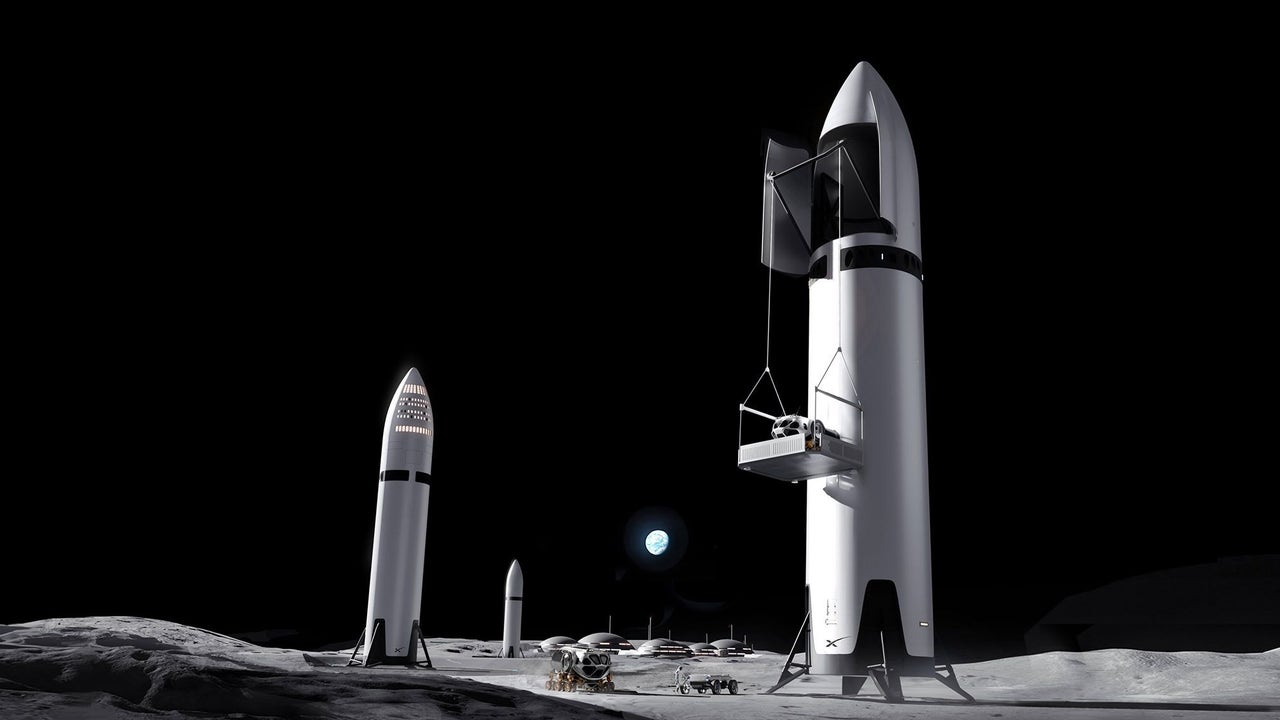
Last week was difficult for SpaceX. Sean DuffyUS Secretary of Transportation and Acting Director of the POTannounced that the space agency was reopening the contract for the mission’s lunar lander Artemis III that the company Elon Musk obtained in 2021. Delays in the development of Starship HLS -which run parallel to those of the rocket Starship– represent a new opportunity for Blue Origin and other companies, but this does not mean that SpaceX has been left out of the equation, although it could happen.
Musk reacted in his style, charging against Duffy on social networks. But yesterday SpaceX gave a calmer response and, incidentally, showed with new renderings what the enormous Starship HLS lunar lander (acronym for Human Landing System or Human Landing System).
And seeing Starship inside and out, the truth is that it has nothing to do with the known lunar landers, not just those of the missions Apollo half a century ago, but compared to the Lanyue that will take Chinese astronauts to the lunar surface in 2030.
SpaceX, in a publication on its website, recalls that the Starship HLS concept goes beyond that of a lunar lander. It is the first stone of a permanent human presence on our satellite and, therefore, much larger.
Starship HLS, a lunar lander like no other that has ever existed
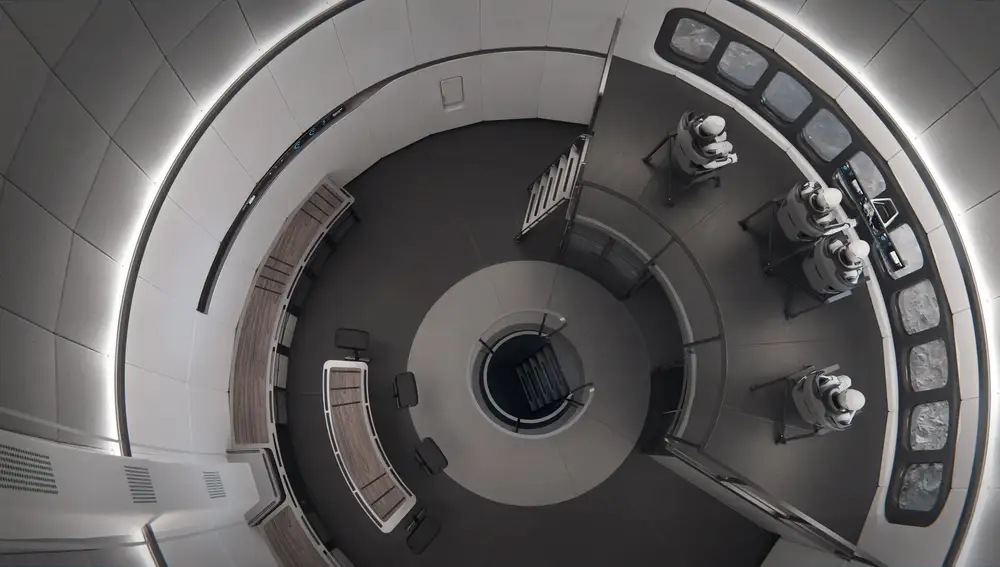
Starship HLS measures 52 meters high, which would be equivalent to the height of a residential building about 17 floors. If the lunar module of the Apollo program had a habitable volume of 4.5 cubic metersStarship multiplies it by 136 and reaches the 613 m³. Lanyue only doubles the space used by the Apollo astronauts.
‘Starship offers an unrivaled ability to explore the Moon, thanks to its large size and its ability to refuel in space. A single Starship has a pressurized habitable volume of more than 600 m³, which is equivalent to approximately two-thirds of the pressurized volume of the entire International Space Stationand is equipped with a cabin that can be expanded to accommodate a large number of explorers and two airlocks for surface exploration,’ the company explains in the publication.
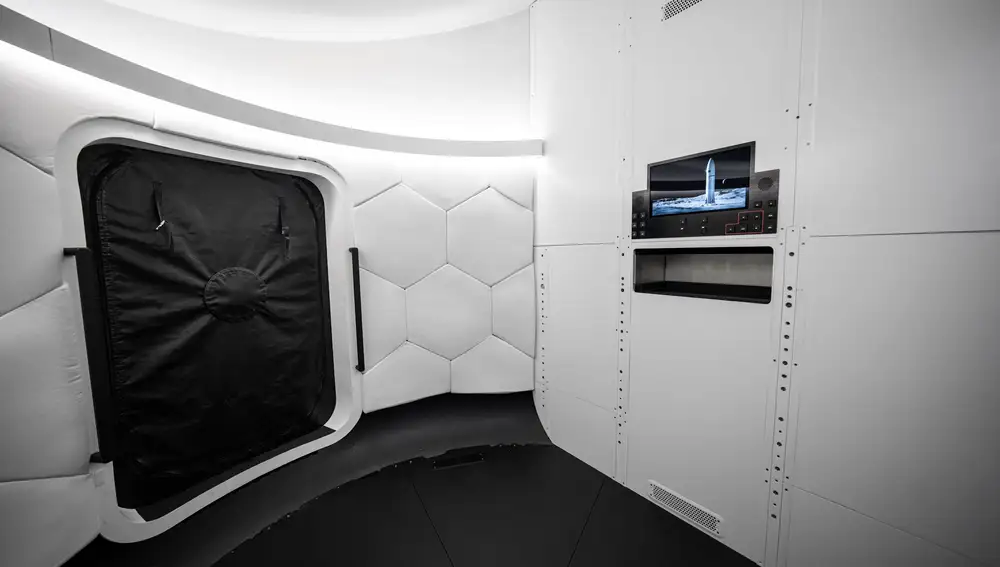
Each of the locks will contain a living space of 13 m³; This alone is more than what Lanyue has.
In the renderings, you can see a huge space with a height of several floors and stairs to go from one level to another. All of them with an aesthetic reminiscent of science fiction. ‘2001: A Space Odyssey’. There is a control area and a series of windows from which to observe the outside.
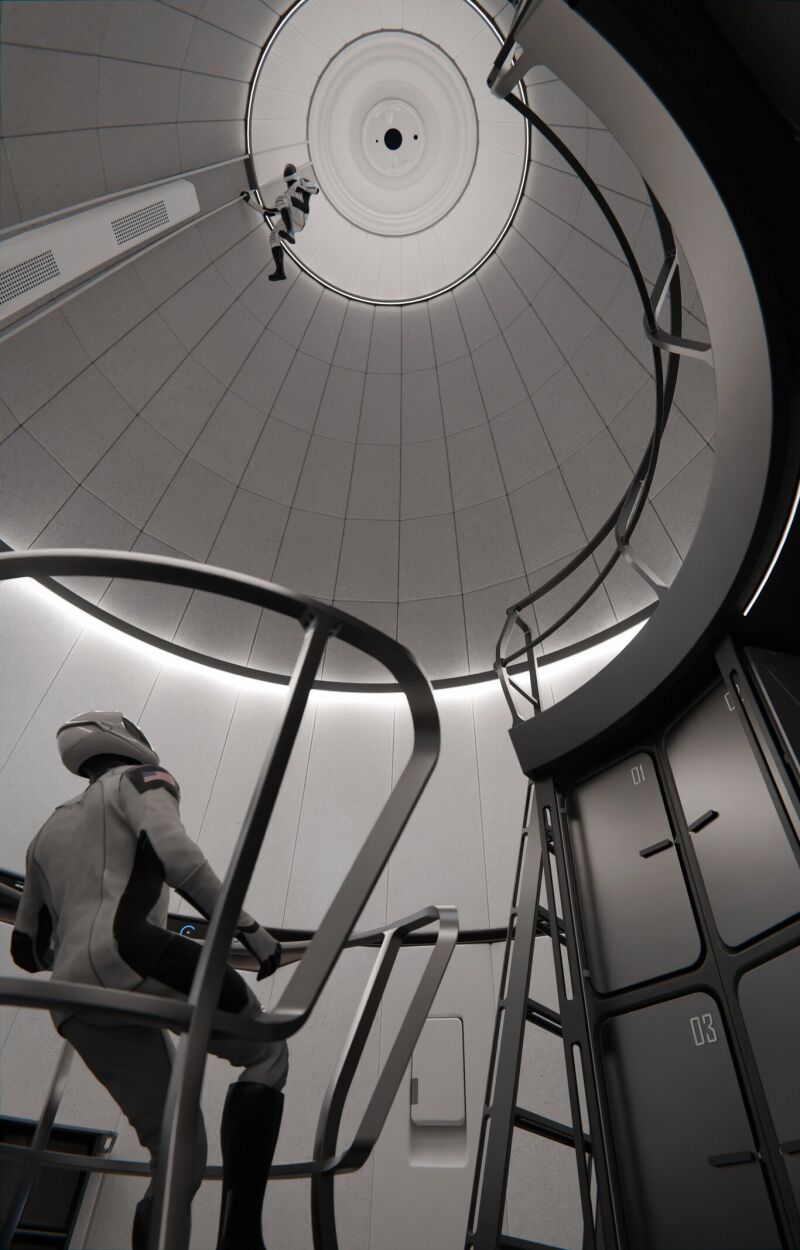
The space for the astronauts is large, but it occupies a relatively small part of the ship, which must also transport 100 tons of cargo. This will include rovers for lunar exploration, nuclear reactors to have energy on the surface of the Moon and premade lunar habitats.
The status of Starship HLS
SpaceX emphasizes that it works in two developments in parallel. On the one hand, the Starship megarocket, which has already carried out 11 test flights with varying degrees of success, and on the other, the Starship HLS lander. SpaceX finances the development of the first on its own, while the contract for the lunar module guarantees ‘that the company only gets paid after successfully completing the progress milestones and that American taxpayers do not assume the extra costs’.
According to the update, SpaceX has already completed 49 milestones for the lunar module, including validation of the shield against micrometeorites and space debris, and demonstrations of the ‘lunar environmental and life support and thermal control’ systems. Additionally, he plans to make more progress soon: send a Starship upper stage to Earth orbit and complete an in-space refueling test in 2026if everything goes as planned.
A ‘simplified’ plan for Starship HLS

The company reiterates that it shares NASA’s goal of returning to the Moon ‘as expeditiously as possible’ and wants to be ‘a central facilitator’ of the ultimate purpose of the Artemis program: establish a permanent and sustained human presence on the Mooninstead of repeating the Apollo scheme of leaving only flags and footprints there. And he assured be willing to be flexible to make that happen.
‘Since the contract was awarded, we have been consistently responsive to NASA as Artemis III requirements have changed and have shared ideas on how to simplify the mission to align with national priorities. In response to recent requests, We have shared and are formally evaluating a simplified mission architecture and concept of operations that we believe will enable a faster return to the Moon while improving crew safety.‘, says SpaceX.
The current plan for Artemis III calls for its four astronauts to take off aboard a rocket SLS from NASA and travel in the capsule Orion to lunar orbit, where they will rendezvous with Starship’s upper stage. The astronauts will transfer to Starship, which will take them to the lunar surface and back as many times as necessary.
The new publication does not offer details about that possible ‘simplified’ architecture. But Musk already advanced in his tirade with Puffy, on October 20, that the company would adapt: ’SpaceX is advancing at lightning speed compared to the rest of the space industry. Plus, Starship will end up doing the entire lunar mission. Remember it.’