
A study published this Monday in The New England Journal of Medicine presents a new method with which blind people can see again and even read. For the first time, several patients affected by a progressive form of blindness called age-related macular degeneration (AMD) They recovered part of their central vision through an ocular implant connected to smart glasses. The patients made enough progress in their vision recovery to being able to do crossword puzzles and read books again.
The participants in the study were over 60 years old and had been diagnosed with AMD, a pathology that slowly damages the macula -the part of the retina responsible for central vision-, in both eyes.
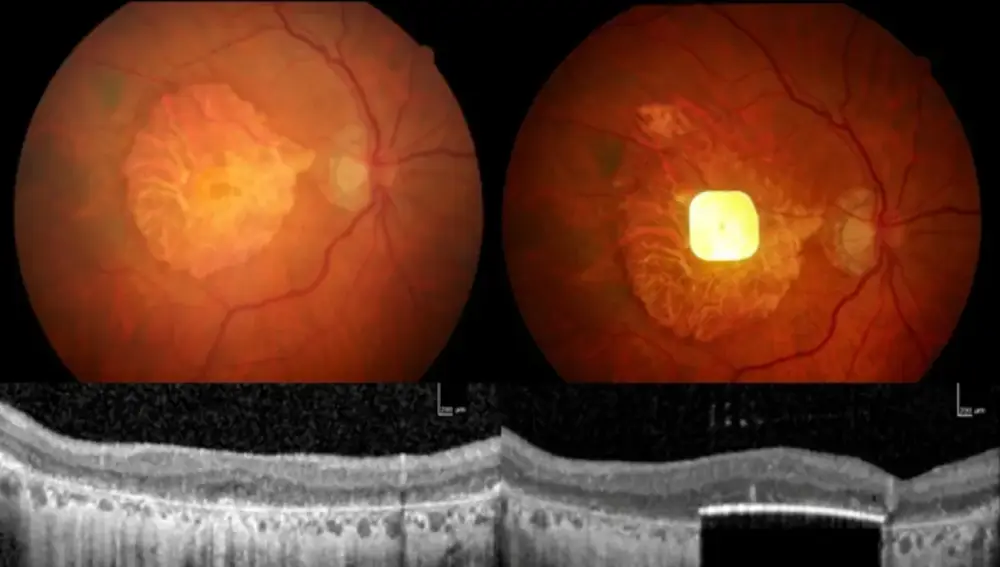
AMD cannot be reversed because cells in the center of the retina die over time. The study focused on restoring some of that lost vision through the system PREMIUMacronym in English for Photovoltaic retinal implant with microchip. PRIMA uses an ultra-thin wireless microchip with 378 photovoltaic cells intended to replace the function of rods and cones damaged by AMD.
The implant is placed surgically under the macula in an intervention that lasts less than two hours, and the eye takes approximately a month to adapt before the chip activates.
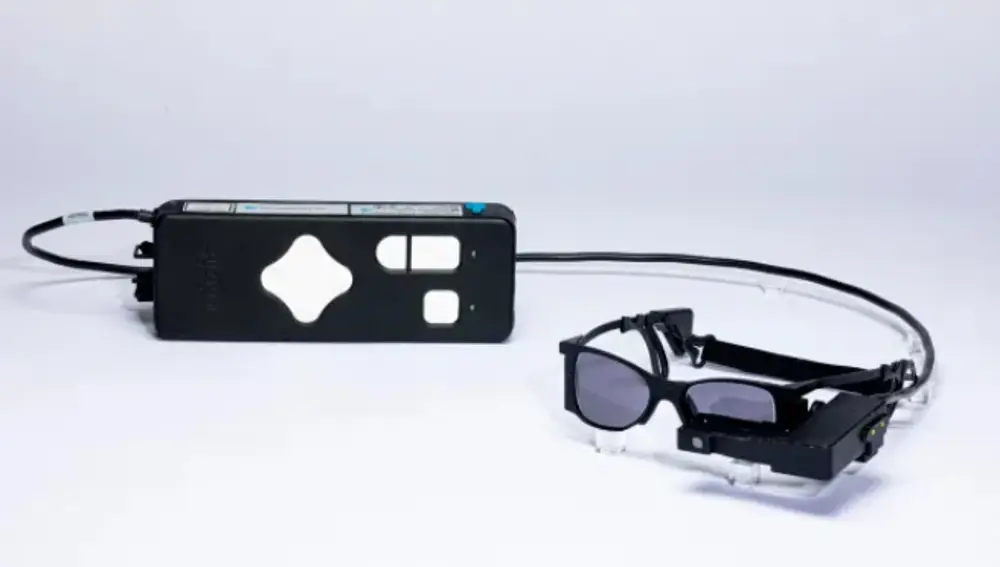
Afterwards, the patient receives a computer and smart glasses equipped with a mini camera and an infrared light projector. The camera captures the user’s environment and sends the visual data to the computer, which translates it into an infrared light pattern. The projector transmits that pattern to the chip, where it becomes electrical current that stimulates the remaining healthy neurons in the retina. The brain interprets these new electrical impulses as visual information. Patients spend several months training with these cues until they can read again.
Mahi Muqitassociate professor of Institute of Ophthalmology, University College London and responsible for the trial in the United Kingdom, has stated that ‘in the history of artificial vision, this represents a new era. Blind patients are actually able to regain functional central vision, something that has never been achieved before‘.
The study began with 38 patients who received the implant. At the end, the 84% of participants He was able to read letters, numbers and words, and even five lines of an optotype – a chart or poster used in visual acuity tests – thanks to the PRIMA system.
It is not a perfect solution; the vision that patients perceive is black and white and somewhat blurrybut researchers outside the study described the progress as ‘amazing’according to The New York Times.
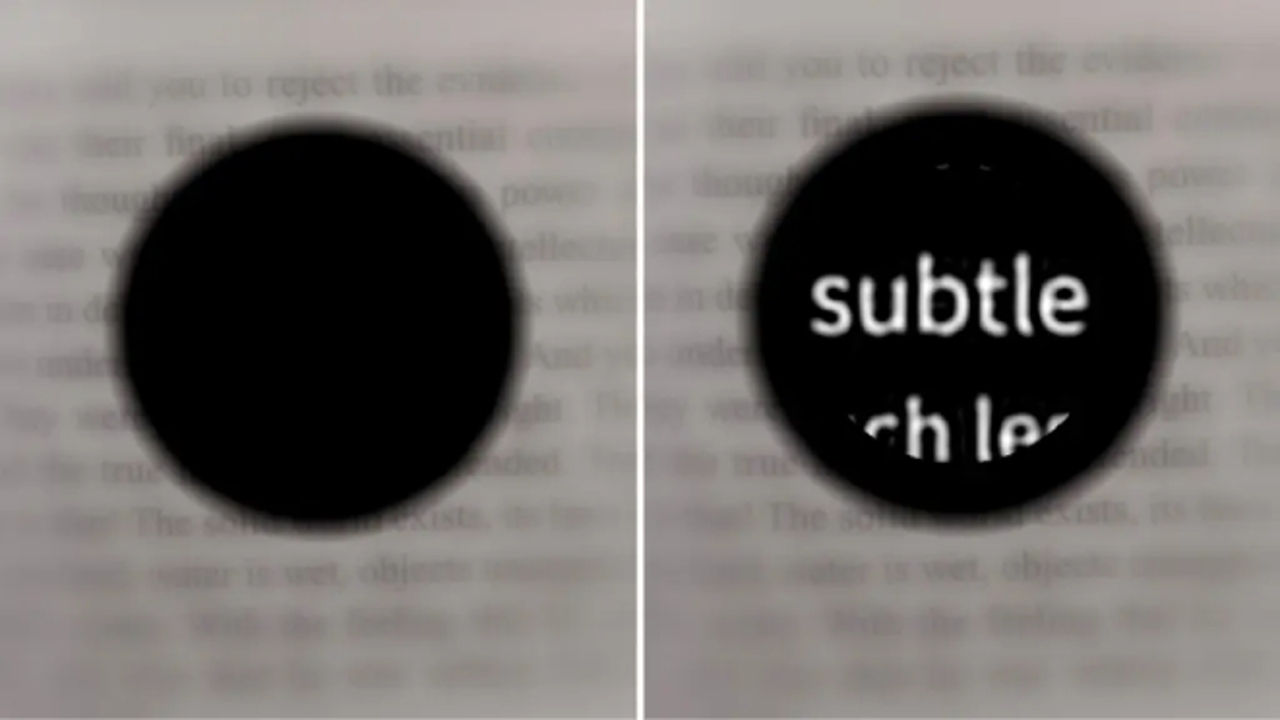
Sheila Irvineone of the participants in the study, stated that ‘before the implant it was like having two black discs in the eyes, with the periphery distorted. It’s a new way of looking through your eyes and it was really exciting when I started seeing a lyric.’ Irvine says he can now read tiny letters on labels and complete crossword puzzles.
The technology comes from the brain-computer interface company Science Corporationfounded and run by Max Hodakwho co-founded Neuralink next to Elon Musk in 2016. Science Corporation acquired the retinal implant technology from the French company Pixium Vision in 2024, after it ran out of funding after a decade of development, according to IEEE Spectrum.