
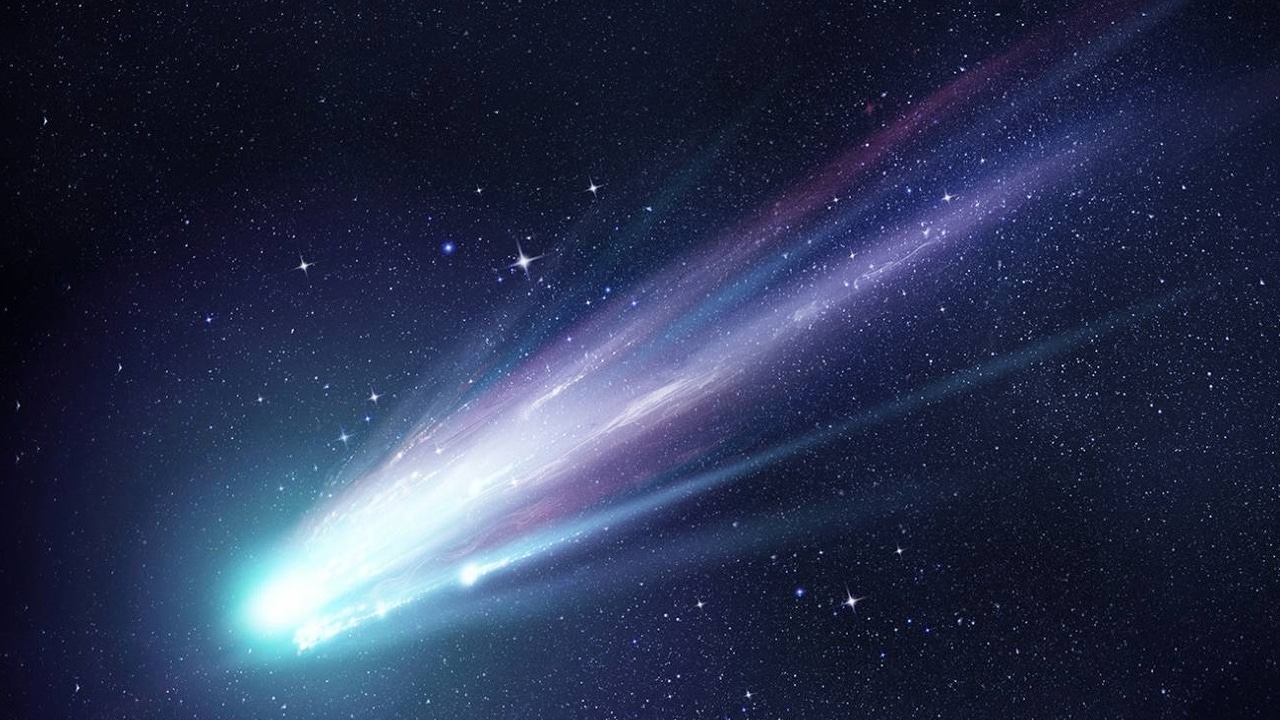
Comet C/2023 A3 (Tsuchinshan-ATLAS) was discovered in early 2023 by researchers at China’s Purple Mountain Observatory. During the end of last year and the beginning of this year, its sighting was mere speculation. As the months of 2024 have passed, it has become a reality. Also called the “comet of the century” will favor the Northern Hemisphere, so can be seen from Spain. This event is a beauty of the astral world and will not be seen again for 80,000 years.
Where and when will comet Tsuchinshan-ATLAS be seen?
In Spain, the rural areas and with little light pollution They are ideal to appreciate this phenomenon. The best time of day For those who want to glimpse it, it is when the sun setsin the night sky.
Although it can already be seen in some points, its maximum visibility peak It will be this weekend, that is, October 12 and 13which will be the day with closer approach to Earth. From the 2nd of this month until October 9th it could already be seen, but only through a telescope.
What is the comet of the century?
Those comets that pass close to the sun They are the ones with the most impressive queues. This makes your sighting stand out and fill it with vividness, making your observation a unique and unrepeatable moment. From this comes the name “comet of the century.” C/2023 A3 It already has a length of approximately 21º 42 times the size of the Full Moon
What is the most famous comet?
There are billions of celestial bodies that pass through the solar system, but a few become popular among society. Some of the most famous comets: Halley’s Cometfor being the first periodic cometthat is, it could be seen recurrently from Earth, its last appearance was in 1986 and it is estimated that it will return for 2061.
Another of the comets that resonated among lovers of the cosmos was the Comet “Hale-Bopp”for his colossal sizehad a core more than 60 kilometers in diameter. In 1997 was its last return to Earth and it will not be seen from our planet again for about 2,000 years.