
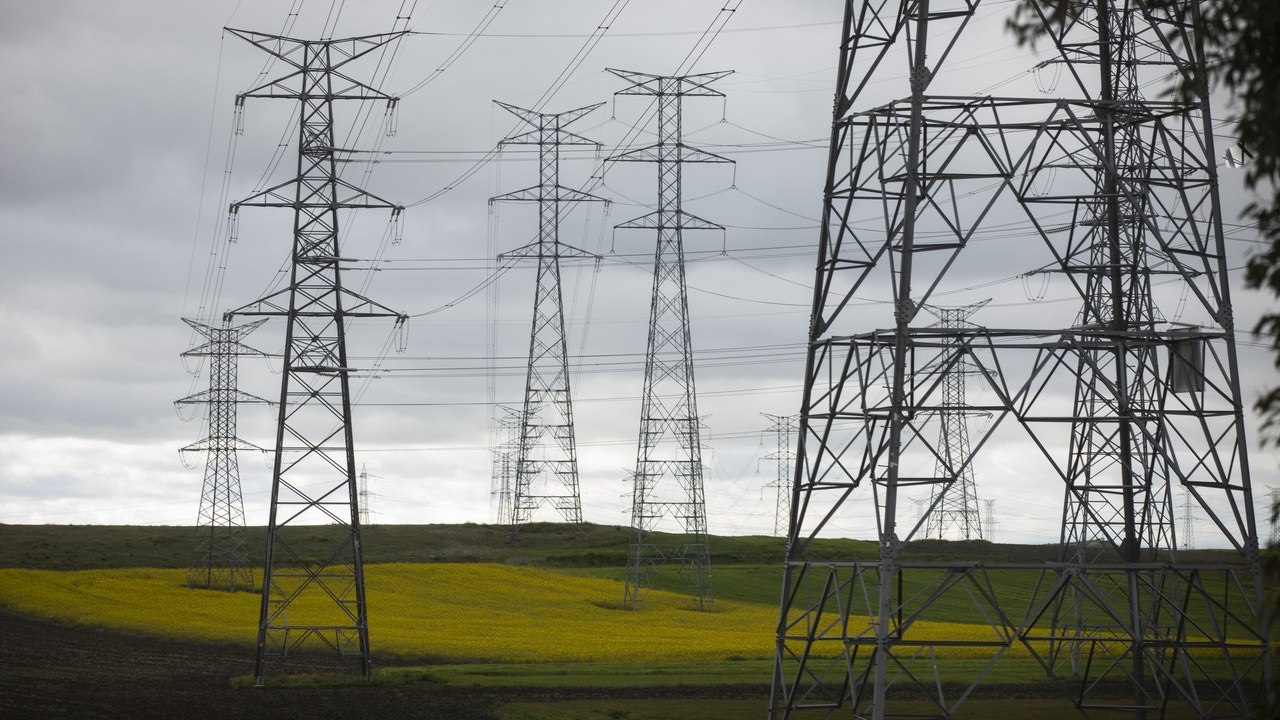
A week ago the BOE published the circular on access and connection to the electrical networks of demand facilities of the National Commission of Markets and Competition (CNMC). A publication that sounds very technical to the average citizen, but that for specialists in the electricity market is considered essential for the decarbonization of the sector, because it focuses on the distribution network. BloombergNEF already says so in its latest report New Energy Outlook: investment in networks must exceed that in renewables; specifically 24.1 billion dollars in distribution networks and 9.6 billion in high voltage transmission worldwide.
To fight climate change we must reduce emissions and to do so replace fossil fuels with renewable energy. In the case of the electrical mix, it means that By 2030 in Spain we must have 62 GW of wind energy and 76 GW of photovoltaic solar (not to mention the hydraulic and solar thermal objectives of the National Energy and Climate Plan, PNIEC). In 2023, Spain will end up with 31 GW of wind and 25.5 of photovoltaics, so efforts must be redoubled in renewable installation. And this is when the distribution network appears, which needs reinforcement both to receive energy and to give it. «Generation often does not occur where it is consumed. Wind and photovoltaics can be installed everywhere and networks can become saturated. It is noticeable that there are nodes – substations where several connection points come together – where you want to pour and cannot because they no longer have the capacity to absorb more and other nodes that do not have the capacity to provide. And there are also those who are neither one nor the other. In the last review of Red Eléctrica (REE), a total of 17 nodes were already defined that are going to tender because they do not have capacity,” says Julio Balana, expert in energy markets at the General Council of Industrial Engineers.
The CNMC regulations were highly anticipated since for some time an avalanche of requests for permits for connection to the network of new data centers and facilities for energy storage or hydrogen production had been verified, and there were certain knots of the transport network in which requests already exceeded the existing capacity. The published text also gives the possibility of flexible access that allows these new users such as batteries or electrolyzers to connect to the networks in congested areas “resulting in benefit for the system since they allow reducing energy discharges,” says the CNMC. . What are these spills? It is energy generated, but that cannot be accumulated (because there is a lack of storage) or integrated into the network because there are mismatches between supply and demand. As La Razón already published a few weeks ago, a recent report from the European Agency for the Cooperation of Energy Regulators (ACER) states that during 2023 more than 12 terawatt hours of electricity from renewable energy sources will be cut in the European Union due to network congestion, with an economic cost of no less than 4,260 million euros. “The wasted energy is equivalent to all the Spanish photovoltaic production corresponding to three months.” Furthermore, each renewable MW that does not enter the grid is a MW that is covered with energy of fossil origin.
However, even though they are necessary, «Investments are limited by law. Red Eléctrica (REE) cannot invest more than 0.065% of GDP and electricity companies can only invest 0.13%. In that sense, companies are asking that they be allowed to invest more, but also that the rate of remuneration they receive be improved,” says Balana.
Challenges for 2030
The integration of such a large amount of renewables faces challenges that seem more insurmountable as 2030 approaches, and this despite the fact that the latest PNIEC insists on increasing the installation objectives. «There are bureaucratic problems with authorizations and what lies ahead for the administration is even greater. The pace of annual installation needed between 2025 and 2030 is enormous; in wind or photovoltaic means install 350% regarding what was built between 2018 and 2023. Then we have to see if the industry has the capacity to respond to so much demand. In addition, there is a lack of storage in batteries or pumping stations and there is a last variable in this tetris which is that the PNIEC considers a final demand that would increase up to 34% and yet in the last 15 years it has dropped 13%. It is expected that many data centers will come, hydrogen production facilities will be built, but they are all very optimistic assumptions that are viewed with doubts even from the sector. Not to mention that energy efficiency is diluted,” the engineer clarifies.
Solar crops or roofs
Olive farmers in Jaén see some 20,000 olive trees in the municipalities of Lopera, Arjona and Marmolejo in danger due to a photovoltaic plant project that will occupy an area equivalent to 100 football fields. At least that is what the Campiña Norte Platform denounces, which brings together individuals and groups in the area and asks that no land expropriation take place (the Electrical Sector Law introduces the possibility of considering the public utility of these projects and forced expropriation for spaces that house these plants). On November 7, ABC says, the first farmers are summoned for expropriation.
From time to time, news about demonstrations against the installation of mega plants in Granada or Córdoba, etc., and some Andalusian platforms have estimated the land subject to expropriation at 40,000 km and 100,000 olive trees in danger only in Jaén and Córdoba. «Our position is that projects must be agreed between companies and owners. The decision of each farmer is free, but we will always refuse any expropriation,” says Rafael Navas, general secretary of Asaja (Agrarian Association of Young Farmers) in Córdoba.
The possibility of expropriations has further inflamed social rejection in some territories such as Aragon, Andalusia or Galicia. In this sense, the Aliente Energy and Territory Alliance advocates self-consumption and the use of rooftops or industrial solar panels for the installation of photovoltaics rather than the occupation of land and less as a replacement for crop areas or near protected areas. Their study “Sustainable renewables: photovoltaics” states that “In Spain there are sufficient anthropized surfaces (more than 300,000 hectares in landfills, waste dumps, roofs, etc.)to install 181 GW, which would produce more than 272,037 GWh/year in photovoltaic energy, figures that are higher than the annual consumption that occurred in 2021, of 259,905 GWh. And they talk about producing energy directly in the CC AA that consume it the most: the Basque Country, Catalonia or Madrid, taking advantage of the surface in urban environments. «In Spain we have 5 GW installed on roofs, while in Australia there are up to 19 GW and there they have a lot of surface area that is desert. However, they have preferred to conserve the territory. The reality is that in Spain self-consumption is decreasing in 2023 and 2024. If each person could install panels up to 3.5 KW in their home, it would be good for citizens who would save between 30 and 40% of the bill and there would be less need to install ground parks. In Germany, with much less sun, there is a boom in solar balconies,” says Fernando Prieto from the Sustainability Observatory.
The entity has 15 proposals for the development of renewables compatible with people and the planet, ranging from enhance self-consumption not to authorize plants in protected areas. “You could take advantage of those projects that are creating social alarm to stop the machines, make a moratorium and rethink and plan how to make this transition,” says Prieto.
Hurricanes and megaplants
This week the images of the impact of Hurricane Milton on the Florida Lake Placid photovoltaic plant run through X. Images released by Duke Energy, the company that owns the facility, show a swath of solar modules torn from the single-axis trackers that held them. The plant has a grid connection capacity of 45 MW.
American media recall that since Hurricane Andrew in 1992, Florida has strengthened its wind codes to make structures more resistant to strong winds: “A key change was the increase in wind speed requirements for new construction. The solar farm, located in Highland County, would have been structurally designed to withstand winds of up to 240 km/h.
The US Department of Energy has a manual of 13 strategies for sites to withstand strong winds and the costs derived from improvements.