
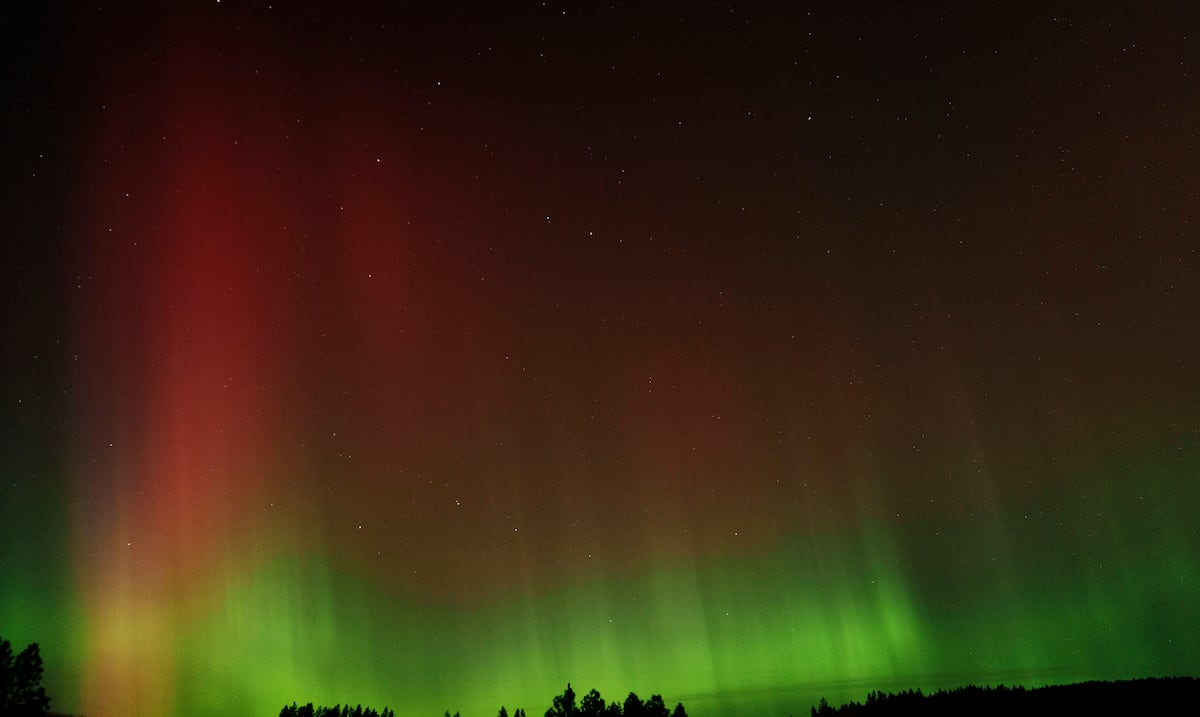
New York — Expect to see more northern lights in places where it is rare to see the spectacleas solar storms will continue, space meteorologists said Tuesday.
This year’s strong solar storms have unleashed brilliant auroras much further south than usual, filling the skies with pink, purple, green and blue tones.
The Sun is currently in the peak phase of its 11-year cycle, making solar flares and the northern lights more frequent. According to the POT and the United States National Oceanic and Atmospheric Administration (NOAA for its acronym in English)this period of activity is expected to last at least one more year, although it will not be known when it will reach its peak until months later.
This solar cycle has produced colorful auroras further south and more are likely, said NASA’s Kelly Korreck.
“There may be some good shows in the coming months”he added.
These storms can also temporarily disrupt power and communications. Before a solar flare, NOAA will alert power plant operators and orbiting spacecraft.
1 / 20 | PHOTOS: Night show with northern lights in different parts of the world. Queens, New York. – The Associated Press
In May, NOAA issued a rare severe geomagnetic storm warning. The solar storm that hit Earth was the largest in more than two decades, producing light shows across the northern hemisphere. That same month, scientists recorded the Sun’s largest eruption, but Earth was out of its way.
In previous solar cycles, storms more intense than the one in May occurred, so Space meteorologists keep a close eye on the Sun to prepare for any major disturbancessaid NOAA’s Bill Murtagh.
Last week, a powerful solar storm dazzled sky watchers far from the Arctic Circle when auroras appeared in unexpected places like Germany, United Kingdom, New England and New York.