
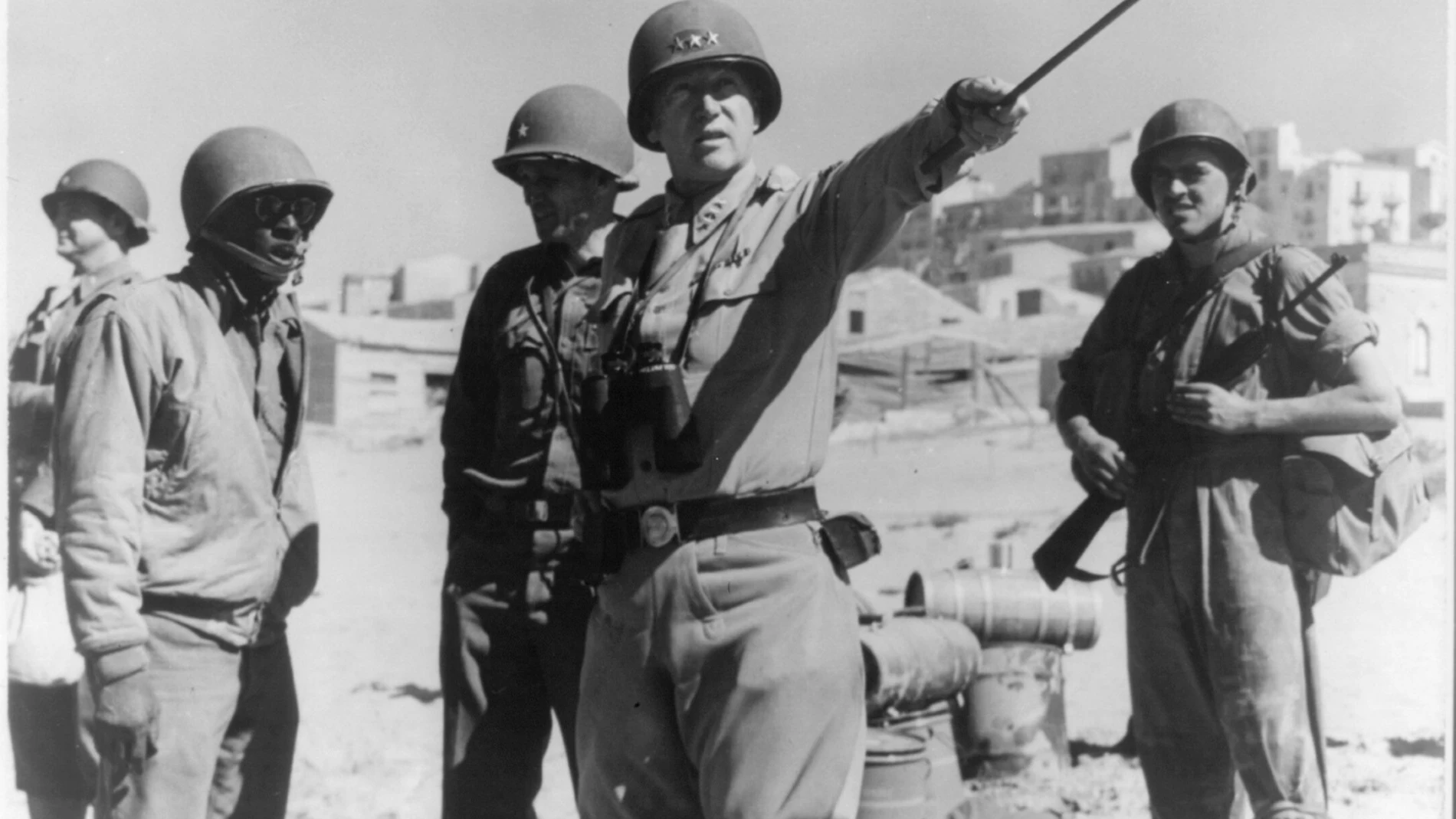
George S. Patton He was one of the most recognizable military figures of the Second World War. His way of leading the troops, his character and his speeches left numerous phrases for history, but one of them has survived especially well over time: “A pint of sweat saves a gallon of blood.”.
The maxim is associated with the speeches that the American general gave before the men of the Third Army in 1944in the months prior to the Normandy landings and during a stage in which the preparation of the troops was one of his great obsessions.
The idea was simple. The greater the effort made before the fight, the fewer the consequences would be once the battle will begin. A direct way to condense a military philosophy based not only on aggressiveness, but also on logistical and operational preparation.
Patton’s phrase that was associated with World War II
The expression has survived to this day with different formulations. There is no single identical transcript of Patton’s speeches and some versions speak of “an ounce of sweat” instead of a pint.
What remains in all of them is the same message. He prior effort, training and planning they could end up avoiding casualties when it came time to enter combat.
The phrase also fit the image that Patton built during the war. Although for decades he was associated with an impulsive personality and an aggressive way of understanding combat, different historical analyzes have also insisted on his ability to prepare complex operations.
The preparation that marked the Third Army
One of the episodes that best reflects this philosophy came in September 1944. Following the rapid advance of the Allied forces through France and Belgium, the pace began to slow and the Third Army did not receive the priority of supplies that Patton had requested.
Faced with this situation, the general focused much of his efforts on preparing his troops for the following operations instead of limiting himself to seeking immediate advance.
The subsequent capture of Metzthe operations in eastern France and the crossing of the Rhine ended up reinforcing the image of a command that combined speed on the battlefield with much more meticulous planning than its fame suggested.
Bastogne and the Battle of the Bulge
Preparation once again gained special importance during the Battle of the Bulgethe great German offensive launched in December 1944.
Patton had previously contemplated the possibility of a major German movement and, when the offensive began, was able to redirect Third Army forces toward Bastogne.
The maneuver helped break the siege of the city and ended up becoming one of the best-known episodes of its history. military career.
Decades later, part of the popular memory about Patton was greatly marked by his cinematographic representation and his provocative nature. However, his reputation as a commander was also built on his ability to prepare troops and operations before launching them into combat.
Patton used it in his speeches before D-Day
The phrase about sweat and blood appears linked to the speeches that Patton gave to his men in 1944, shortly before the D-Day. The general used strong messages to insist on the need to be prepared for what awaited them in Europe.
The different preserved transcriptions do not always reproduce the same words. In one of them, Patton used the expression “an ounce of sweat saves a gallon of blood,” while other versions have popularized the pint formula.
Beyond the specific amount, the meaning hardly changes. For Patton, advancing and surviving depended largely on the work done before coming into contact with the enemy.
A phrase that has survived the war
As the years went by, the maxim stopped being used only in military contexts. The idea that prior effort can avoid major consequences has also ended up appearing in areas such as sports, business or vocational training.
This journey explains why, 82 years laterthe phrase continues to appear associated with George S. Patton and his understanding of command during World War II.
His figure continues to generate debate due to his personality and some of his decisions, but that maxim summarizes a less spectacular facet of his legacy: the conviction that many battles began long before the first shot.