
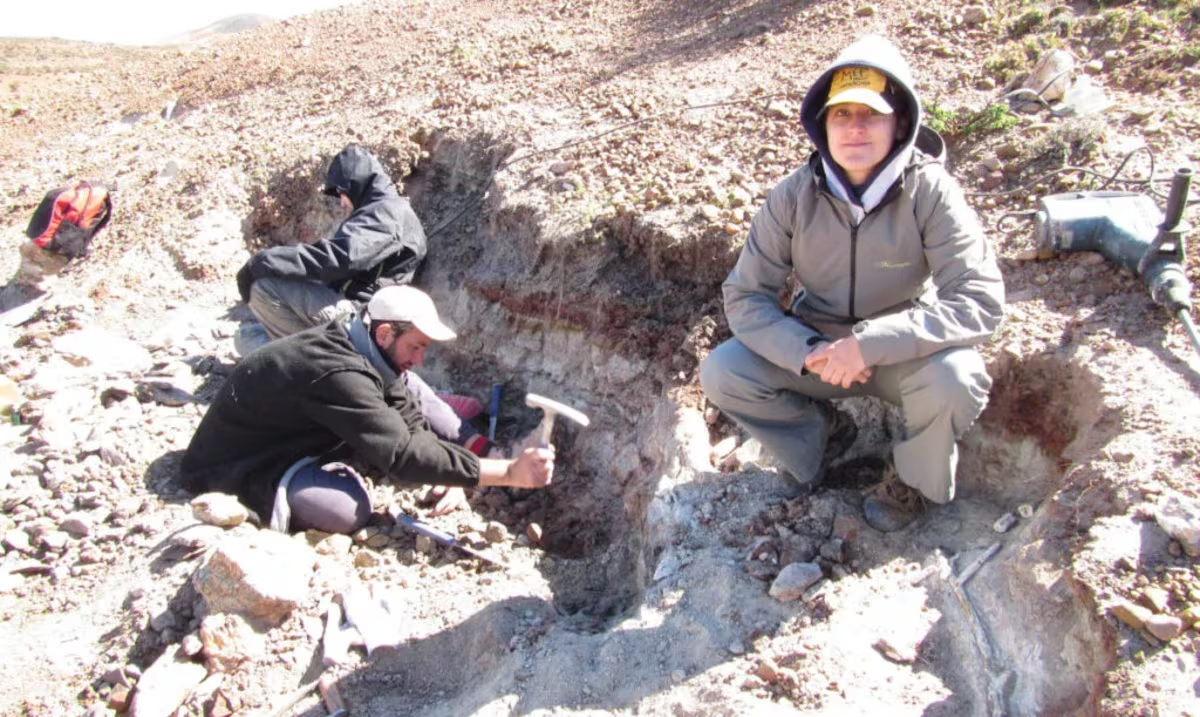
Teruel, Spain- The discovery in Argentine Patagonia of a fossil flower between 6 and 9 millimeters in diameter, found in the same site as the giant dinosaur Patagotitan mayorumreinforces international research on the evolution of flowering plants in which the Dinópolis Foundation of Teruel also participates, in Spain.
An investigation led by Egidio Feruglio Paleontological Museum–CONICETwith the collaboration of the Teruel-Dinopolis Paleontological Complex Foundation, described a new genus and species of fossil flower at the La Flecha site.
The enclave is known for the remains of the sauropod Patagotitan mayorum, according to the Dinópolis Foundation in a press release.
The contrast between both organisms gave the name to the new species, Patagoflora minima, which alludes to its Patagonian origin and its small size.
The study was published in the journal Cretaceous Research and was developed by paleobotanists Giovanni Nunes, Ignacio Escapa and Rubén Cúneo, together with María Gandolfo, from Cornell University, and Luis Miguel Sender, from the Dinópolis Foundation.
Sender pointed out that the discovery allowed us to expand knowledge about the plant diversity of the Cretaceous period and highlighted that these fossils constitute one of the oldest records of flowers in South America.
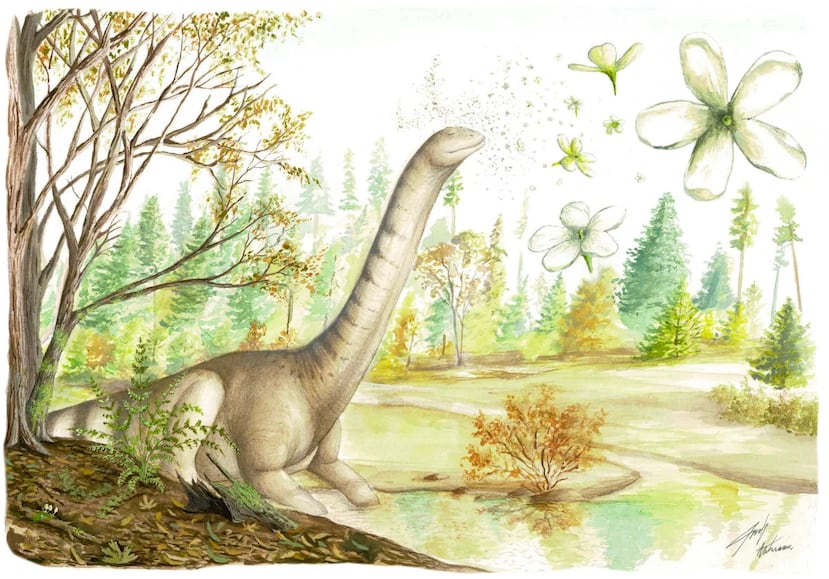
The relevance of the discovery also lies in the scarcity of sites that jointly preserve dinosaur remains and flowers, due to the fragility of the latter.
With an age of 101 million years, the specimens are among the best dated from the ancient continent Gondwana.
Angiosperms of similar age were documented in the Spanish province of Teruel (central east), making this territory a key area to compare records and advance the study of the early evolution of flowering plants on a global scale.